TLDR
- Durability: Peridot rates 6.5 to 7 on the Mohs hardness scale, the softest stone in Azeera’s engagement ring catalog. This requires the most protective setting of any stone in this guide and the most deliberate daily care habits. A bezel or halo setting is essential. With the right setting and consistent habits, peridot is an appropriate and genuinely striking engagement ring choice.
- Color: Peridot ranges from lime green to yellowish green, unlike any other commonly available gemstone. The color comes from iron in the stone’s crystal structure and cannot be altered by heat treatment. What you see in the rough is what you get. The finest stones achieve a vivid, saturated olive-to-pure green. Color holds best in natural daylight.
- Origin story: Peridot is the only gemstone that forms in the Earth’s mantle rather than the crust. It reaches the surface through volcanic activity and, extraordinarily, has been found in meteorites. The Egyptians mined it from the island of Zabargad in the Red Sea for thousands of years and called it the gem of the sun. It was Cleopatra’s favored stone, frequently confused with emerald in ancient and medieval records.
- The evening emerald: Medieval and Renaissance jewelers often mistook peridot for emerald. The two stones look most similar in candlelight and torchlight, which is how the nickname evening emerald came to be applied. In natural daylight, peridot’s lime-green is immediately distinct from emerald’s deeper, cooler green.
- Treatment: Peridot is one of the few gemstones in fine jewelry that is almost never treated. No heat treatment, no oil, no resin. The color is entirely natural. This makes the treatment story simpler and cleaner than almost any other stone in this guide.
- Meaning: Peridot is associated with strength, positive energy, protection, and the renewal that follows difficult periods. It is the August birthstone and the traditional gift for the 16th wedding anniversary. Ancient Egyptians called it the gem of the sun for its ability to ward off darkness and bring clarity of purpose.
- Azeera: Every peridot is individually evaluated for color saturation, clarity, and cut before entering our NYC workshop. Natural only. Full disclosure on every stone.
Peridot is the most geologically extraordinary gemstone in this guide. Every other stone in Azeera’s engagement ring catalog forms in the Earth’s crust. Peridot forms in the mantle, the layer of rock beneath the crust that constitutes the bulk of the Earth’s interior. It reaches the surface through volcanic activity, carried in lava flows and in the xenolith inclusions that volcanoes occasionally bring up from extraordinary depth. It has been found in meteorites. It has been recovered from comet dust. It is, in the most literal sense, a stone from another world within our world.
The ancient Egyptians understood this intuitively without the benefit of geology. They called peridot the gem of the sun and mined it on the remote island of Zabargad in the Red Sea for thousands of years. Cleopatra, whose passion for gemstones is among the most documented in antiquity, is believed to have favored peridot above other stones. Many of the emeralds she was recorded as wearing were, according to surviving pieces and historical analysis, actually peridot.
A peridot engagement ring is an unconventional and genuinely bold choice. The lime-green to yellowish-green color that peridot produces is found in no other widely available engagement ring stone. It is a color that some buyers find immediately compelling, while others find it unexpected in a fine jewelry context. For buyers who respond to it, it tends to produce a deep and lasting attachment, precisely because it is so unlike any other ring they have seen.
There is a durability reality to address honestly. Peridot rates 6.5 to 7 on the Mohs hardness scale, which places it at the lower end of the range for engagement ring use. This is real, it matters, and it shapes the setting and care requirements considerably. This guide addresses it directly. If you are still comparing peridot to other options, our complete guide to gemstone engagement rings covers every stone side-by-side. If you are ready to focus on peridot, read on.
Why Choose a Peridot Engagement Ring?
A Color Found Nowhere Else
Peridot’s lime green to yellowish-green is one of the most distinctive colors in the entire gemstone world. It is not the deep, cool green of emerald. It is not the lighter, more transparent green of tsavorite garnet. It is an earthy, warm, slightly yellowish lime green with an olivine quality that immediately identifies the stone to anyone who knows it. For buyers who respond to this color, no other stone provides a satisfactory substitute. The choice of peridot is often made for this specific color above all else, and the buyers who make it tend to feel very certain it is exactly right for them.
A Genuinely Extraordinary Origin Story
No engagement ring stone has an origin story that matches peridot’s. Every sapphire, ruby, emerald, and diamond in fine jewelry formed in the Earth’s crust under geological conditions that, while extraordinary, are processes happening continuously across millions of years of rock formation. Peridot formed in the mantle. The olivine crystals that become peridot when gem-quality form at depths of between 20 and 55 miles below the Earth’s surface, under conditions of heat and pressure that the crust never experiences. They reach the surface only when deep volcanic activity carries them upward in basalt lava flows or in the xenolith inclusions that some eruptions bring from extraordinary depth.
For couples who want a ring that carries a genuinely remarkable physical story in addition to its personal meaning, peridot offers something unique. Every other stone in this guide formed near the Earth’s surface. Peridot came from deep within the planet and was delivered to the surface by forces that reshape continents.
The Cleopatra Connection
The historical and cultural connections of peridot are among the richest of any gemstone in fine jewelry. The ancient Egyptians mined peridot on the island of Zabargad, also called St. John’s Island or Topazios, in the Red Sea. Mining operations there date back more than three thousand years, making it one of the oldest continuously worked gemstone mines in the world. The Egyptians called peridot the gem of the sun and believed it had the power to ward off darkness, evil, and the anxieties of night. Workers who mined it were required to continue working in the dark because the stone was believed to glow after sunset, though this was most likely a misinterpretation of its highly reflective surface in torchlight.
Cleopatra’s famous emerald collection has been reexamined by gemologists and historians over the past century. The consensus is that many of the stones she wore and gave as gifts were actually peridot from Zabargad rather than emerald. The two stones look most similar in candlelight and in the warm tones of ancient oil lamps, which is precisely how ancient queens were most often seen. For a ring that connects its wearer to one of the most celebrated figures in human history, peridot carries that thread directly.
The Evening Emerald
The nickname “evening emerald” refers to peridot’s tendency to resemble emerald in warm artificial light, while revealing its distinctly warmer, more lime-toned character in daylight. Medieval and Renaissance jewelers, working primarily by candlelight and torchlight, frequently confused the two stones in their records and inventories. Some of the emeralds listed in medieval European royal and ecclesiastical inventories are now understood to have been peridot. The name evening emerald is not a marketing phrase. It is a description of a genuine optical phenomenon that has puzzled observers for 2,000 years.
A Green Engagement Ring at an Accessible Price
For buyers who want a green engagement ring, the options at fine jewelry quality are emerald, tsavorite garnet, and peridot. Emeralds of fine quality are expensive and require significant care due to their jardin. Tsavorite garnet of comparable quality is increasingly rare and carries premium prices. Peridot offers a vivid, warm green at prices that allow the full design of the ring, including the setting, metalwork, and overall craft, to receive the attention it deserves. For buyers who want green above all else and want the budget to work toward design rather than stone rarity, peridot is the most accessible option.
The August Birthstone
Peridot is the August birthstone, one of the most widely recognized birthstone associations. For buyers with an August birthday or anniversary, the personal connection to the stone adds a dimension of meaning that no other choice can provide. The August birthstone connection also gives peridot an immediate recognizability as a conversation piece in an engagement ring, particularly for buyers who can explain the volcanic origin story and the Cleopatra connection.
Peridot Durability: The Honest Assessment
Peridot rates 6.5 to 7 on the Mohs hardness scale. This is the lowest hardness of any stone in Azeera’s engagement ring catalog, and the durability assessment here needs to be more specific and more cautionary than for any other stone in this guide.
What Mohs 6.5 to 7 Means
At 6.5 to 7 on the Mohs scale, peridot sits at or just below the quartz threshold of 7. Quartz is present in the dust, sand, and many common surfaces encountered in daily life. For a stone in this hardness range, everyday contact without protection will cause surface micro-abrasion over time, gradually dulling the polish and reducing the stone’s brilliance. This is not a hypothetical risk. It is a documented characteristic of wearing peridot in an exposed setting for extended periods.
Peridot also has moderate cleavage, meaning there are directional planes in its crystal structure along which it is slightly more vulnerable to splitting under direct impact. This is not as pronounced as the cleavage in topaz, which has perfect basal cleavage and can split cleanly under the right impact, but it is a structural characteristic that makes the setting and the wearer’s habits more important for peridot than for amethyst or garnet, which have better overall toughness despite comparable hardness.
The Setting Requirement
The most important thing a buyer can do to protect a peridot engagement ring is to choose a setting that eliminates or minimizes direct contact between the stone’s edges and hard external surfaces. A full bezel setting, which encircles the entire perimeter of the stone in a continuous band of metal, is the strongest recommendation and the setting that Azeera most consistently recommends for peridot. The bezel protects the girdle from lateral impact, reduces abrasive contact with surfaces, and holds the stone in a low-profile, close-to-the-hand position, where it is less likely to receive direct knocks.
A halo setting, which surrounds the central peridot with a ring of smaller diamonds, provides meaningful edge protection through the surrounding stones and elevated metal frame. This is also an appropriate choice and one that adds considerable visual presence. A channel setting for peridot accent stones is very protective. A high-prong solitaire setting that elevates the stone significantly above the band is the configuration most likely to lead to problems and is not recommended for peridot in a daily engagement ring.
The Wear Habit Commitment
Of all the stones in this guide, peridot requires the most consistent, deliberate care for daily wear in an engagement ring. Buyers who successfully wear peridot engagement rings for many years are those who genuinely commit to removing the ring before any activity involving physical labor, gardening, sport, cooking with heavy equipment, or contact with hard surfaces. For office wear, social occasions, and the quieter rhythms of daily life, a well-set peridot ring is beautiful and appropriate. But the ring must come off when conditions change. Buyers who are honest with themselves about whether they will maintain this habit consistently should factor that assessment into their stone choice.
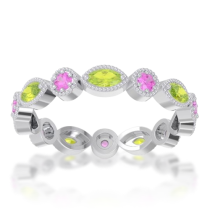
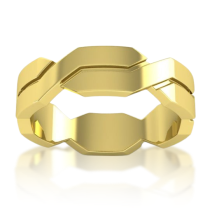
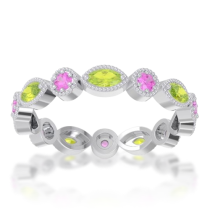
It is worth noting that Azeera currently ranks first for peridot wedding bands, reflecting a real customer base that wears peridot in ring settings and values it deeply. Those customers understand the stone’s character and care for their rings accordingly. The buyers who are happiest with peridot are the ones who chose it knowing exactly what it asks of them.
Understanding Peridot Color
Peridot’s color is determined by its iron content and cannot be altered by heat treatment or any other enhancement. This is one of the most important distinctions between peridot and almost every other stone in this guide: the color you see is entirely natural and cannot be improved. What this means practically is that color evaluation at the point of purchase is particularly important because the stone’s appearance cannot be optimized after the fact.
The Color Range
Peridot ranges from a pale, slightly yellowish green to a vivid lime green to a deeper, more olive-toned green. The most prized color for fine jewelry is a vivid, pure green with minimal yellow modifier, though the warmth of peridot’s green is intrinsic to the stone and cannot be entirely separated from its character. Stones from certain origins, particularly Pakistan and Burma, tend to be purer and more vivid green. Stones from the San Carlos Apache Reservation in Arizona, one of the most significant commercial sources, tend to be lighter and more yellowish-green.
What to Look For
The most important qualities to evaluate in a peridot for an engagement ring are saturation and tone. A well-saturated stone with a medium tone holds its color under natural daylight and in good indoor lighting. Pale stones with weak saturation appear nearly colorless in typical indoor conditions, losing the very quality that makes peridot distinctive. Overly dark, heavily olive stones can read as brownish or murky. The sweet spot is a stone with a clear, vivid lime-green color that retains its warmth across different lighting conditions without going pale or brownish.
Lighting Behavior
Peridot performs best under natural daylight, where its lime-green color is most vivid and distinctive. Under warm incandescent lighting, the stone’s yellow component becomes more dominant, and it can read as yellowish-green rather than lime green. This shift is the optical basis of the evening emerald comparison: in warm artificial light, the distinction between peridot and emerald is much less obvious than it is in daylight. When evaluating a peridot for an engagement ring, natural daylight is the essential viewing condition.
Inclusions and Clarity
Peridot is not a Type I gemstone in the way that aquamarine is, but fine-quality peridots are expected to be eye-clean or very near eye-clean. The most common inclusion in peridot is a disk-shaped feature called a lily pad inclusion, formed by liquid inclusions that appear lotus- or lily-pad-shaped under magnification. These are characteristic of the stone and, in small numbers, are accepted as a natural characteristic rather than a defect. Heavily included stones with visible internal features that affect transparency or color are less appropriate as an engagement ring centerpiece.
Peridot vs Emerald: The Green Stone Comparison
Buyers researching green engagement rings almost always encounter both peridot and emerald, and the comparison between the two is worth addressing directly.
Color
Emerald produces a deeper, cooler, more purely green color, with the complex richness of chromium and vanadium. Peridot produces a warmer, lime-toned green with a yellowish cast, characteristic of iron-based coloring. In daylight, the two stones are easy to distinguish. In warm artificial light, particularly incandescent and candlelight, the resemblance can be considerable, which is the historical basis of the confusion between them. The right choice depends entirely on which color character the buyer is drawn to.
Durability
Emerald rates 7.5 to 8 on the Mohs scale, higher than peridot’s 6.5 to 7. However, natural emerald has lower practical toughness due to jardin, the surface-reaching inclusions present in almost all natural emeralds. Peridot has moderate cleavage but is generally more uniformly tough than natural emerald in terms of impact resistance. Neither stone is as suitable for unrestricted daily wear as sapphire or ruby. Both require protective settings and deliberate wear habits. Lab-grown emerald has better toughness than natural emerald and compares more favorably to peridot in terms of practical durability.
Treatment and Maintenance
Natural emerald almost universally requires oil treatment to manage the visibility of surface fractures, and this treatment leaches out over time, requiring periodic re-oiling by a professional jeweler. Peridot requires no treatment of any kind. Its color is entirely natural, and its care requirements are straightforward. For buyers who want a green engagement ring with the simplest possible treatment story and care profile, peridot is the more accessible choice.
Price
Fine natural emerald, particularly from Colombia, with low treatment degree, is significantly more expensive than comparable peridot. For buyers who want a green engagement ring and want the budget to go toward a larger stone, a finer setting, or superior craft, peridot offers better value per carat of visual color impact.
What Does a Peridot Engagement Ring Mean?
Peridot’s symbolism has accumulated across Egyptian, Roman, medieval European, and metaphysical traditions, and its core associations are unusually cohesive for a stone with such a long and diverse history.
The ancient Egyptians called peridot the gem of the sun. This was not simply a poetic phrase. It reflected a genuine belief that peridot contained light within it, that it glowed in darkness and had the power to ward off night terrors and the anxieties of the dark. Workers in the Zabargad mines were required to continue collecting stones through the night because the stones were believed to reveal themselves in darkness in a way they concealed in daylight. The Egyptian association of peridot with the sun suggests the stone is connected to clarity, purpose, energy, and the power to dispel confusion and fear.
In ancient Rome, peridot was associated with positive energy, abundance, and the generosity of spirit that comes from genuine inner security. It was considered a stone of warmth toward others and of the confidence that allows generosity rather than hoarding. In medieval Europe, it was incorporated into church furnishings and used in ecclesiastical settings because of its association with clarity of purpose and protection against corruption.
In more modern gemstone traditions, peridot is associated with the renewal that follows difficult periods, with the strength to begin again after hardship, and with the ability to bring warmth and positive energy to those around the wearer. These associations are less about romantic love specifically and more about the kind of person the wearer is and the quality of energy they bring to a relationship.
For an engagement ring, peridot’s symbolism is most fitting for couples who want to mark a commitment with the meaning of positive energy, renewal, and the particular clarity and strength that come from having worked through difficulties together before arriving at this moment. It is the stone of coming through something and choosing well on the other side.
Peridot is the August birthstone and the traditional gift for the 16th wedding anniversary. The 16th anniversary is not one of the traditionally celebrated milestones, which makes its association with peridot somewhat personal and less commercially prominent, but one that carries meaning for those who know it.
Setting Styles for a Peridot Engagement Ring
The setting choice is more critical for peridot than for any other stone in this guide. The right setting actively compensates for the stone’s lower hardness and moderate cleavage. The wrong setting is the primary cause of unsatisfactory outcomes with peridot engagement rings.
Bezel Setting
A bezel setting is the strongest recommendation for a peridot engagement ring, and the one Azeera most consistently advises for buyers who want to wear their ring with confidence. A full bezel encircles the entire perimeter of the stone in a continuous band of metal, eliminating the exposed girdle that is most vulnerable to abrasive contact and lateral impact. The stone sits close to the hand, with a low profile that reduces the likelihood of direct contact with hard surfaces. The visual effect, particularly in yellow gold or rose gold, is clean, warm, and architecturally satisfying. An oval or round peridot in a full bezel setting is the most practical and one of the most elegant options for a peridot engagement ring worn daily.
Halo Setting
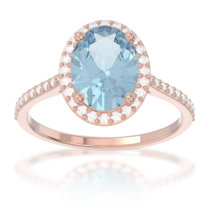
A halo setting surrounds the central peridot with a ring of smaller diamonds, providing meaningful edge protection while substantially increasing the stone’s visual presence. The contrast between the lime green of the peridot and the white sparkle of the surrounding diamonds is immediately striking, with the warm green made more vivid by the surrounding cool white. A halo setting also adds a practical layer of metal and stone between the central peridot’s girdle and external surfaces. This is an excellent choice for buyers who want maximum visual impact alongside reasonable protection.
Three-Stone Setting
A three-stone setting places the peridot at the center, flanked by two side stones. A central peridot with two diamond side stones creates a clean composition with strong contrast. The side stones provide some lateral support for the central stone, depending on their profile. This setting works particularly well for oval peridot stones, where the horizontal line of the three stones creates a wide field of warm lime green on the finger.
East-West and Elongated Cuts
An oval peridot oriented horizontally across the finger in an east-west bezel or low halo setting creates one of the most striking green engagement ring designs at any price point. The horizontal orientation maximizes the color surface visible from above and gives the ring a contemporary, individual character that is difficult to achieve with any other stone. In yellow gold, an east-west oval peridot in a full bezel is a ring with immediate presence and clear identity.
Vintage and Edwardian
Peridot was a favored stone of the Edwardian and early Art Nouveau periods, when its lime green complemented the pale, delicate color palettes that these design movements favored alongside diamonds and pearls. Buyers drawn to period aesthetics will find peridot one of the most historically appropriate choices for a ring in the Edwardian style.
Choosing the Right Metal for a Peridot Engagement Ring
Peridot’s warm, lime-toned green responds very differently to warm and cool metals. The metal choice changes the entire character of the ring.
Yellow Gold
Yellow gold is the most harmonious and most historically traditional pairing for peridot. The warm tone of yellow gold reinforces the slightly yellowish quality of peridot’s green, creating a rich, cohesive, and distinctly warm composition. The two colors share a warmth of tone that makes the ring read as a unified expression of solar warmth and natural vitality rather than a simple color contrast. Historically, the Egyptian and Roman associations of peridot with sunlight and warmth were most commonly expressed in settings of gold, which reinforces this pairing at both visual and symbolic levels. Azeera offers 14k and 18k yellow gold.
Rose Gold
Rose gold creates an interesting and very appealing combination with peridot. The warm pinkish tone of rose gold and the warm lime green of peridot are analogous in temperature, creating a composition that reads as richly warm rather than starkly contrasted. For buyers who prefer a softer, more romantic peridot ring than yellow gold offers, rose gold is an excellent choice. It works particularly well for lighter, more yellowish peridot stones, where the warmth of the metal enhances the stone’s natural character. Azeera offers 14k and 18k rose gold.
White Gold and Platinum
White gold and platinum create the highest contrast with peridot’s warm lime green, making the color appear more vivid and distinct against the cool neutral metal. This is a bold, contemporary approach that can be very effective for stones with the most vivid, most saturated lime green color. For stones with any brownish or heavily yellowish warmth, white metal can emphasize these characteristics in a less flattering way than warm metals do. Platinum is the most durable and low-maintenance option. White gold requires rhodium plating every one to two years. Azeera offers 14k and 18k white gold and platinum.
Origin and Treatment: A Genuinely Simple Story
Peridot has the simplest treatment story of any stone in this guide. It is also one of the most geologically fascinating in terms of origin.
No Treatment
Peridot is one of the very few fine gemstones in the jewelry market that is almost universally untreated. Heat treatment does not improve peridot’s color because its iron-based coloring is not responsive to temperature changes, as corundum or beryl is. No oil treatment is used because peridot lacks the surface-reaching fractures that make oil treatment applicable to emerald. No irradiation, no filling, no coating. The color you see in a peridot is the color the stone grew with over millions of years in the mantle. This makes peridot one of the most straightforwardly honest stones in the market.
Major Origins
The San Carlos Apache Reservation in Arizona is one of the world’s most significant commercial sources of peridot, producing stones that range from light yellowish-green to a clean medium green. The quality is consistent, and the volume is substantial. Pakistan, particularly the Sapat area in the Northwest Frontier Province, produces some of the finest quality peridot in the world, with vivid, well-saturated stones in larger sizes. Burma produces fine peridot with a strong, pure green color. The volcanic island of Zabargad in the Red Sea, the ancient Egyptian source mined for over three thousand years, still produces peridot, though in much smaller quantities than the major modern sources. Origin has a moderate effect on color character for peridot, but is less commercially significant than origin is for ruby, sapphire, or emerald.
Caring for a Peridot Engagement Ring
Peridot requires the most attentive daily care of any stone in Azeera’s engagement ring catalog. The requirements are specific and non-negotiable for a ring that will look its best over many years of daily wear.
Daily Habits
Remove the ring before any physical labor, gardening, sports, cooking with heavy equipment, moving furniture, or any activity where the ring might contact a hard surface with significant force. This is more comprehensive than the removal habit required for amethyst or garnet, because peridot’s lower hardness and moderate cleavage make it more vulnerable to cumulative hard contact. Apply perfumes, hand lotions, and hairspray before putting the ring on. Remove it before swimming in chlorinated pools or hot tubs, and before using any cleaning products. Store it separately from all harder gemstones.
Cleaning at Home
Soak the ring in warm water with a few drops of mild dish soap for 10 to 15 minutes. Use a very soft brush, softer than you might use for sapphire or ruby, to gently clean around the setting. Rinse thoroughly and pat dry with a lint-free cloth. Avoid ultrasonic cleaners, which can stress the stone and propagate existing inclusions. Avoid steam cleaning. Avoid any abrasive cleaning materials. The warm-water and mild-soap routine is the only safe home-cleaning method for peridot.
Professional Care
Have the ring professionally inspected and cleaned once a year. For peridot specifically, the annual inspection is more important than for harder stones, because the cumulative effects of wear are more likely to appear, and because early detection of any setting loosening allows repair before the stone is at risk. Azeera offers a lifetime warranty on manufacturing defects and free resizing for the first year after purchase.
A Note on Longevity
A peridot engagement ring, worn with the appropriate care and in the right setting, will remain beautiful for decades. Many peridot rings from the Edwardian period, now over a century old, survive in excellent condition because they were set in protective bezels or closed settings and cared for accordingly. The stone’s lower hardness is a care consideration, not a sentence. The buyers who love their peridot rings tend to love them specifically, deeply, and for a long time.
Why Choose Azeera for Your Peridot Engagement Ring?
Azeera has been a family business for 75 years. Every ring is cut and set by hand in our New York City workshop. We have an established track record with peridot specifically: our peridot wedding band is one of the most recognized products in our collection, reflecting both the quality of our sourcing and the trust of buyers who have worn our peridot pieces successfully over many years.
We source individual peridot stones evaluated against strict standards for color saturation, tone, and clarity. The difference between a vividly saturated peridot and a pale, yellowish stone with weak color is enormous in person and often difficult to assess from photographs. We select stones specifically for their vivid lime green, which makes peridot such a distinctive engagement ring choice. Pale or heavily brownish stones are not appropriate for a fine engagement ring centerpiece, and we do not accept them.
We are direct about durability. We will not suggest that peridot is equivalent to sapphire or aquamarine for daily wear, because it is not. We will help you choose the right setting for your lifestyle and explain precisely which care habits will keep your ring looking exceptional for decades. Buyers who approach peridot with full information tend to love their rings deeply. We believe that giving you that information is part of our responsibility.
We do not use stock photography. Every product image on our site shows the actual stone you are purchasing. For peridot, where color saturation varies considerably, and the difference between a vivid and a pale stone is the entire case for buying it, this transparency is particularly important.
Our peridot engagement rings are available in all seven metals: 14k and 18k yellow gold, 14k and 18k white gold, platinum, and 14k and 18k rose gold. We also offer fully custom commission engagement rings for buyers with a specific design, cut, or origin preference.
Browse our peridot engagement ring collection to begin. And if you are still comparing peridot to other options, our complete guide to gemstone engagement rings covers every stone we offer in detail.
Frequently Asked Questions
Is peridot durable enough for daily wear as an engagement ring?
Yes, with the most protective setting available and the most consistent daily care habits in this guide. Peridot rates 6.5 to 7 on the Mohs hardness scale, which places it at the lower end of the appropriate range for engagement ring use. A full bezel or halo setting that protects the stone’s perimeter is essential. Removing the ring before any physical labor, gardening, sports, and hard contact with surfaces is a necessary habit. Buyers who meet both requirements wear their peridot rings successfully for many years. Buyers who choose high prong settings and wear them without restriction will encounter problems relatively quickly. The stone rewards care and punishes neglect more directly than any other in this catalog.
What is the evening emerald, and why is peridot called that?
The nickname “evening emerald” refers to peridot’s tendency to closely resemble emerald in warm artificial light, particularly candlelight and incandescent light, while revealing its distinctly lime-toned, warmer green in natural daylight. Medieval and Renaissance jewelers, who worked almost entirely by candlelight, frequently confused the two stones in their records and inventories. Some of the emeralds attributed to Cleopatra and to medieval European royal collections are now believed to have been peridot. The name reflects a genuine optical phenomenon rather than an attempt to elevate the stone’s prestige. In natural daylight, peridot and emerald are not easily confused.
What makes peridot geologically unique?
Peridot is the only gemstone in fine jewelry that forms in the Earth’s mantle rather than the crust. The olivine crystals that form gem-quality peridot at depths of 20 to 55 miles below Earth’s surface, under conditions of heat and pressure that the crust never experiences. They reach the surface through volcanic activity, carried in basalt lava flows and in xenolith inclusions that deep eruptions bring to the surface from the mantle. Peridot has also been found in meteorites and in comet dust samples. No other engagement ring gemstone has an origin story that reaches this far into the Earth or beyond it.
What does a peridot engagement ring mean?
Peridot is associated with strength, positive energy, protection, and the renewal that follows hardship. The ancient Egyptians called it the gem of the sun and believed it had the power to ward off darkness and bring clarity of purpose to those who wore it. In Roman tradition, it was connected to positive energy, abundance, and the generosity of spirit that comes from genuine inner security. In modern gemstone traditions, it is associated with the ability to begin again, to bring warmth and light to those around you, and to approach the future with clarity after difficulty. An engagement ring symbolizes a commitment made with clear eyes, positive energy, and the strength that comes from having worked through something hard together. It is the August birthstone and the traditional gift for the 16th wedding anniversary.
How does peridot compare to emerald for a green engagement ring?
The two stones produce distinctly different greens. Emerald’s green is deeper, cooler, and richer. Peridot’s green is warmer, lighter, and more lime-toned. Emerald rates 7.5 to 8 on the Mohs scale but has lower practical toughness than its hardness suggests due to jardin, the surface-reaching inclusions present in almost all natural emeralds. Peridot at 6.5 to 7 is slightly softer but has more uniform toughness in practice. Natural emerald requires oil treatment that needs periodic refreshing. Peridot requires no treatment of any kind. Fine natural emerald is significantly more expensive than comparable peridot. For buyers who want the deepest, most prestigious green and are prepared to manage the care and maintenance requirements, emerald is the better choice. For buyers who want a warm, distinctive green with the simplest care story and the most accessible price, peridot is the right choice.
Is peridot ever heat-treated?
No. Peridot is one of the very few fine gemstones in the jewelry market that is almost universally untreated. The iron-based coloring that gives peridot its distinctive lime green is not responsive to heat treatment in the way that corundum or beryl coloring is. No heat, no oil, no resin, no irradiation. The color you see in a peridot is entirely natural, formed in the Earth’s mantle over millions of years. This is one of peridot’s most straightforward and reassuring characteristics for buyers who value complete naturalness in their gemstone.
Which metal pairs best with peridot?
Yellow gold is the most harmonious and most historically appropriate pairing for peridot. The warmth of yellow gold reinforces the warm, slightly yellowish quality of peridot’s lime green, creating a cohesive, sunlit composition that connects to the stone’s ancient associations with the sun and with warmth. Rose gold creates a softer, equally warm combination that works particularly well for lighter peridot stones. White gold and platinum create the highest contrast and can make a vividly saturated peridot appear even more vivid, but can also emphasize the warm yellow component of stones with less pure green. For most peridot buyers, yellow gold is the first and strongest recommendation.
How much does a peridot engagement ring cost?
Peridot is one of the most accessible fine gemstones in the jewelry market. A well-sourced peridot of excellent color and clarity is significantly more affordable per carat than sapphire, emerald, or ruby, which means the budget can be allocated primarily toward the setting, metalwork, and craft quality that determine whether a ring is genuinely distinguished. An Azeera peridot engagement ring in a well-designed bezel or halo setting, in yellow or rose gold, offers strong value and excellent craftsmanship at an accessible price. For buyers who want a genuinely individual green engagement ring and want the design to make the most of the budget, peridot is an outstanding choice.