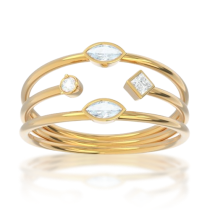
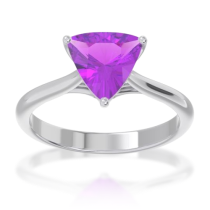
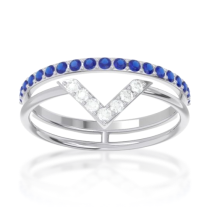
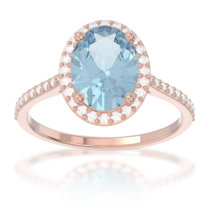
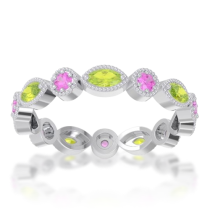
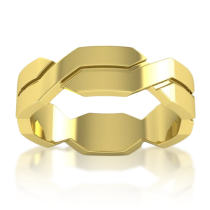
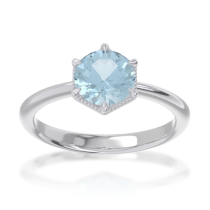
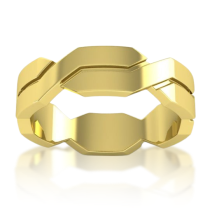
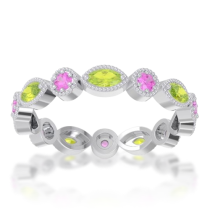
Wedding bands are significant—and choosing whether they should match is both a style decision and a reflection of your relationship dynamic. Whether you want a perfectly coordinated pair or love expressing individuality, this guide explores how and why couples choose matching, complementary, or unique bands that still feel connected.
TL;DR
- Matching rings can symbolize unity and coherence; differing styles highlight individuality within a partnership.
- Coordinated accents—like gemstones, engravings, or metals—tie sets together even when the bands aren’t identical.
- Modern couples often opt for “His & Hers” or “Ours” rings that are equally symbolic and stylish, regardless of whether they match.
Why (and How) Matching Works
Matching wedding bands can be beautifully symbolic and deeply stylish, reflecting:
- Visual harmony: Adds a refined coherence—from mirrored metals to repeated textures.
- Emotional unity: Represents partnership by visibly linking symbols of commitment.
- **Couples’ synergy**: Especially meaningful for wedding photos, ceremonies, or anniversary wear.
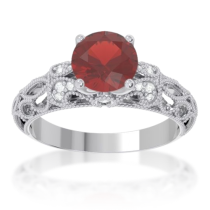
Popular matching styles include identical flat bands, luxurious brushed finishes, or signature design elements, such as milgrain edges or meaningful engravings.
- Design Harmony Without Cloning
If you prefer coordination without identical bands, consider:
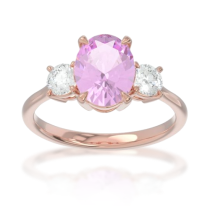
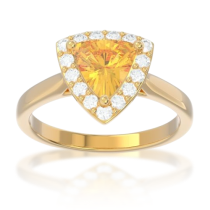
- Gemstone accent coordination: One band with a diamond; the other with a colored gemstone (e.g., sapphire or ruby) in the same setting.
- Engraving parallels: Matching phrases, timelines, or personal mottos etched inside the band—allowing each ring to have a unique fingerprint while sharing a shared meaning.
- Metal tone and finish: If one partner prefers rose gold and the other platinum, choose a consistent finish style—such as hammered, brushed, or matte—to unify the pieces visually.
- His & Hers vs. Their Rings
The narrative around ring matching has evolved to reflect more inclusive partnerships:
- His & Hers Sets: Traditionally gendered—but now redesigned to prioritize aesthetic preference and symbolism over gender norms.
- “Their” Rings: Unisex, intentionally designed to look cohesive (matching stones, shared silhouettes). These styles support partnerships without gender binaries—perfect for same-sex couples or those who value flexibility.
- Choosing What Feels Right
Reflect on:
- Lifestyle needs: Active professions may favor slim bands, while artists may prefer customizable textures.
- Comfort and wearability: Thicker or weighted bands may appear bold, but they require careful consideration.
- Long-term aesthetics: Consider evolving jewelry trends and how your rings will complement future pieces, such as anniversary bands or stackable rings.
FAQ
Q: Do matching bands have to look the same?
No—they can share design features like metal tone, texture, or theme without being identical. What matters most is the symbolic connection.
Q: Are unique bands better for couples?
It depends on your story. Unique designs allow individual expression, while shared elements can still celebrate unity in thoughtful ways.
Q: Is engraving every ring an option?
Absolutely. Personalized engravings—dates, words, or even coordinates—create storied meaning that transcends surface design.
Final Thoughts
Wedding bands are deeply personal—but they don’t need to be identical to be symbolic. A meaningful union can be reflected through minimalist coordination, thoughtful accents, or individual statements that are woven together intentionally.
Let your rings tell your story—whether harmonized in look, engraved in sentiment, or designed for comfort and life ahead.