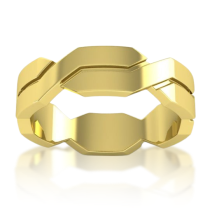
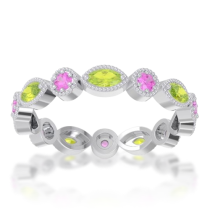
Most men spend about 20 minutes choosing their wedding band. That’s a problem, because you’re going to wear it every single day for the rest of your life. A gemstone wedding band is a particularly personal choice: the stone you choose carries meaning, the metal affects how it ages, and the setting determines whether it survives daily life or ends up sitting in a drawer.
This guide walks you through every decision, in the order you should make it — from gemstone to metal to setting to care. By the end, you’ll know exactly what to look for, what to avoid, and which stones are genuinely built for a man who wears his ring through everything.
Why Men Are Choosing Gemstone Wedding Bands
The all-metal band has been the default for generations, but the conversation has shifted. More men today want a ring that reflects something beyond the fact that they got married — a stone tied to their partner’s birthstone, a color that means something, or simply a design that doesn’t look like every other ring in the room.
Colored gemstones in men’s wedding bands aren’t a new idea. Historically, gemstone rings were a mark of status and personal identity — kings, warriors, and clergy wore colored stones as symbols of power, loyalty, and protection. Today, the symbolism is more personal, but the instinct is the same: a gemstone makes a ring yours.
The practical question is how to choose one that holds up.
Step 1: Start with Durability — The Mohs Scale Explained
Before you fall in love with a stone based on color or meaning, understand how it performs. A wedding band lives on your hand during handshakes, workouts, yard work, and everything else. Not every gemstone is up to that.
Gemstone hardness is measured on the Mohs scale, which runs from 1 (talc) to 10 (diamond). For a ring worn daily, you want a stone rated 7 or higher. Anything below that will scratch from everyday dust and environmental contact — quartz particles in the air alone are rated 7, which means a softer stone will dull over time no matter how careful you are.
Here’s how the most popular men’s wedding band stones rank:
|
Gemstone |
Mohs Hardness | Daily Wear Verdict |
| Diamond |
10 |
Excellent — the benchmark |
| Blue Sapphire |
9 |
Excellent — ideal for daily wear |
| Ruby |
9 |
Excellent — highly durable |
| Aquamarine |
7.5–8 |
Good — suitable with a protective setting |
|
Emerald |
7.5–8 | Good hardness, but requires care (see below) |
|
Black Onyx |
6.5–7 | Acceptable — best in bezel or flush settings |
| Peridot | 6.5–7 |
Better suited to low-wear lifestyles |
One important nuance: hardness and durability are not the same thing. Emerald, for example, scores up to 8 on the Mohs scale — but most natural emeralds contain inclusions and internal fractures that make them more vulnerable to chipping than their hardness score suggests. A protective bezel setting offsets this significantly. Black onyx is technically softer than emerald, but its dense, uniform structure makes it tougher in practice.
The bottom line: if you work with your hands or live an active lifestyle, sapphire, ruby, or diamond accents are your safest choices. If your day is primarily desk-based, aquamarine, emerald, and black onyx are all workable with the right setting.
Step 2: Choose Your Gemstone
Blue Sapphire — The Classic Choice for Men
Blue sapphire is the most popular colored gemstone in men’s wedding bands, and for good reason. At Mohs 9, it’s second only to diamond in hardness, making it genuinely suited to daily wear without compromise. Its deep, cool blue reads as masculine and understated — it adds presence without being showy.
Sapphire also carries centuries of meaning. Historically associated with loyalty, wisdom, and strength, it has been worn by kings and knights as a symbol of honor. For a wedding band, that symbolism translates naturally.
Best paired with: Platinum or white gold for a clean, contemporary look. Yellow gold for contrast, highlighting the depth of the blue.
At Azeera: Explore our men’s blue sapphire wedding bands — available in 14K and 18K gold, as well as platinum, with eternity and accent-stone settings.
Black Onyx — Bold, Modern, Distinctive
Black onyx has become the defining stone for men who want a wedding band that genuinely looks different. Its flat, opaque black surface creates a stark, graphic quality that no other gemstone matches — particularly when set against white gold or platinum, the contrast is striking.
It sits at 6.5–7 on the Mohs scale, which is the lower end of acceptable for daily wear. The key is choosing a setting that protects the stone — a bezel or flush/channel setting keeps the onyx from taking direct impact. Avoid claw or prong settings for this stone.
Black onyx also pairs exceptionally well with diamonds. A black onyx and diamond band offers the boldness of the stone alongside the brilliance of the accent stones — it’s a pairing that works whether you’re wearing a suit or dressed down.
Best paired with: White gold or platinum for maximum contrast. Yellow gold for a warmer, more vintage feel.
At Azeera: See our men’s black onyx wedding bands — including our standout Black Onyx and Diamond combinations.
Ruby — Strength, Passion, and Presence
Ruby carries more weight per carat than almost any other gemstone. Red has always been the color of strength and commitment, and a ruby in a men’s ring — particularly as a single featured center stone in a signet-style band — makes a statement that no other color does.
At Mohs 9 (the same as sapphire — both are varieties of corundum), ruby is one of the most durable gemstone choices available. It won’t fade, won’t scratch easily, and requires no special daily care beyond what any fine ring needs.
The trick with ruby in a men’s band is proportion. Smaller accent rubies running along the band read refined and masculine. A larger center ruby in a low, flat setting reads bold without becoming ostentatious. The setting style matters here more than with most other stones.
Best paired with: Yellow gold, which deepens and warms the red. White gold for a more dramatic, high-contrast effect.
At Azeera: Browse our men’s ruby wedding bands — available in multiple setting styles and gold options.
Emerald — For Men Who Want Something Genuinely Rare
An emerald wedding band is not the obvious choice — which is exactly what makes it compelling. The deep, saturated green of a natural emerald is unlike any other stone; it’s rich, complex, and commands attention in an understated, rather than flashy, way.
Be informed about the tradeoff: emeralds have a hardness of 7.5–8, but are typically more internally included than sapphires or rubies, which means they can chip if struck directly. A bezel setting or a design with the stone recessed into the band addresses this effectively. For a man who doesn’t work with his hands and takes his ring off for physical activity, an emerald wedding band is an entirely viable choice.
Symbolically, emerald has been associated with growth, renewal, and commitment — qualities that map meaningfully onto a wedding band.
Best paired with: Yellow gold, which is the traditional and most flattering pairing for emerald’s green. Rose gold for a more contemporary feel.
At Azeera: Explore men’s emerald wedding bands — designed to showcase the stone while maximizing its longevity.
Aquamarine — Calm, Cool, and Underrated
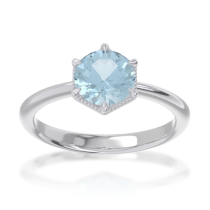
Aquamarine is one of the most underestimated options in men’s jewelry. Its pale blue-green color is calm and sophisticated — not as intense as sapphire, but more distinctive and harder to place, which gives it a quiet rarity.
At 7.5–8 on the Mohs scale, it’s a durable stone, and its transparency and clarity mean it catches light beautifully even in small accent sizes. It’s an excellent choice for men who want a colored stone that doesn’t draw attention from across the room but rewards a closer look.
March’s birthstone, traditionally associated with clarity and calm, aquamarine is also a meaningful choice for couples in which one partner has a March birthday.
Best paired with: White gold or platinum, which complements its cool tones. Yellow gold for a warmer, more unexpected contrast.
At Azeera: See our men’s aquamarine wedding bands.
Peridot — Distinctive and Deeply Personal
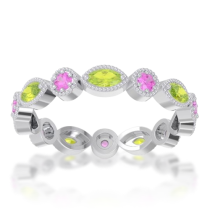
Peridot’s vivid yellow-green is one of the most distinctive colors in gemstones — it’s the kind of stone people ask about. At 6.5–7 on the Mohs scale, it falls at the lower end of daily-wear suitability, meaning it’s best suited to men who lead less physically demanding daily lives or who intend to take their ring off for manual activity.
Where it wins is originality. A peridot wedding band is genuinely uncommon, and for men who place value on that, its softer hardness is a reasonable trade-off.
August’s birthstone is a meaningful choice for couples with late-summer connections.
Best paired with: Yellow gold, which balances its bright green warmth. White gold for a more contemporary, graphic look.
At Azeera: Browse our men’s peridot wedding bands.
Step 3: Choose Your Metal
The metal you choose affects how the ring ages, how it pairs with other jewelry you wear, and how it complements your chosen stone. Here’s what to know about each option:
14K Yellow Gold is the most classic choice for colored gemstone bands. The warmth of yellow gold deepens ruby and emerald, and provides a rich contrast to cool-toned stones like sapphire and aquamarine. 14K is more durable than 18K because of its higher alloy content — a practical advantage for a ring worn daily.
18K Yellow Gold has a richer, deeper color than 14K and is a better choice if you want a luxurious appearance. Slightly softer, so better suited to desk-based lifestyles.
14K White Gold offers a cool, contemporary look and pairs exceptionally well with sapphire, black onyx, and aquamarine. It requires periodic rhodium plating to maintain its bright finish — typically every 1–2 years depending on wear.
18K White Gold is richer-looking than 14K and slightly softer. The same rhodium replating consideration applies.
Platinum is the most durable precious metal and requires no replating — it maintains its appearance indefinitely with proper care. It’s hypoallergenic, which matters for men with metal sensitivities, and its weight gives the ring a premium feel. The highest-end choice for an active wearer.
Rose Gold is worth considering if you want something that stands apart. Its warmth works particularly well with peridot and ruby, and it has a distinctly contemporary quality that pairs well with modern ring designs.
Step 4: Understand the Setting Styles
The setting determines both how the stone looks and how protected it is. For men’s wedding bands, these are the most relevant options:
Channel Setting: Stones are set into a channel cut into the band, flush with or just below the metal surface. This is the safest setting for daily wear — the metal walls protect the stones from impact on both sides. Ideal for sapphire, ruby, and black onyx.
Bezel Setting: A continuous rim of metal wraps around the stone, holding it securely. Excellent protection — the best choice for emerald and black onyx where impact vulnerability is a concern. Gives a clean, modern look.
Pavé / Micro-Pavé: Small stones set closely together across the surface of the band, secured by tiny metal beads. Creates a continuous sparkle effect. Beautiful on sapphire and diamond-accented bands; requires occasional professional inspection to ensure the stones remain secure.
Flush / Gypsy Setting: The stone is set deep into the metal, completely flush with the surface. Highly protective and minimalist-looking — a single flush-set sapphire or black onyx in an otherwise plain band is one of the most sophisticated things a man can wear.
Prong / Claw Setting: Stones are held by raised metal claws. Less common in men’s bands and not recommended for soft or included stones — it leaves the stone exposed. Fine for diamonds and sapphires in dress rings; not ideal for active wear.
Step 5: Width and Comfort Fit
Width is a personal choice, but proportions matter. Most men’s wedding bands range from 4mm to 10mm wide. A narrower band (4–6mm) reads refined and pairs well with a watch or other jewelry. A wider band (7–10mm) makes a stronger statement and suits men with larger hands naturally.
Comfort fit refers to a slightly rounded interior edge that makes the band easier to put on and take off and more comfortable over long periods. If you’ve never worn a ring before, comfort fit is worth requesting — the difference is noticeable within the first week of wearing a new ring.
Caring for Your Gemstone Wedding Band
A gemstone band is not high-maintenance, but a few simple habits will keep it looking exactly as it did on your wedding day.
Clean it at home every few weeks. Soak the ring in warm water with a small amount of mild dish soap for 10–15 minutes. Use a soft toothbrush to gently scrub around the stones and in any crevices. Rinse thoroughly and dry with a soft cloth. This removes the buildup of soap, lotion, and daily grime that dulls gemstone brilliance over time.
Take it off for the right activities. Remove your ring before any activity involving harsh chemicals (cleaning products, chlorine), heavy manual work, or contact sports. This is not about the stone being fragile — it’s about protecting both the stone and the metal from unnecessary stress.
Get it professionally checked once a year. A jeweler can check that stones are secure in their settings, clean it with professional equipment, and repolish the metal if needed. For white gold bands, this is also when rhodium replating is assessed.
Store it separately when not wearing it. Diamonds and sapphires are hard enough to scratch softer gemstones. If you’re taking your ring off, store it in a cloth pouch or its own compartment rather than tossing it into a shared jewelry dish.
Matching Your Band to Your Partner’s Ring
It’s a question that comes up often: do your bands need to match? The short answer is no, but they should be coherent.
The most natural approach is to share a metal, which creates visual unity without requiring identical designs. If your partner’s ring is 14K yellow gold with an emerald, a 14K yellow gold band with a different stone (ruby, sapphire, or even a subtle diamond accent) reads as a coordinated set without being matchy.
Matching the gemstone is a beautiful option where one partner’s stone mirrors the other’s. A sapphire in both rings, for example, carries a shared symbolism of loyalty that many couples find meaningful.
The most personal approach — and the one that tends to age best — is to choose each ring independently, based on what feels right for the individual, with a loose connection in metal or stone color.
Quick Reference: Which Stone Is Right for You?
|
If you want… |
Choose… |
|
Maximum durability, active lifestyle |
Blue Sapphire or Ruby |
|
Bold, modern, and distinctive |
Black Onyx |
| Something classic with meaning |
Blue Sapphire |
|
Rare and striking |
Emerald |
|
Understated and sophisticated |
Aquamarine |
| Truly original |
Peridot |
| Pure luxury and brilliance |
Diamond accents |
Ready to Find Yours?
Every gemstone in this guide is available in our men’s wedding band collection, crafted in 14K and 18K gold and platinum, with free consultation available if you’d like guidance on the right stone and setting for your lifestyle.
Explore Men’s Gemstone Wedding Bands at Azeera →
Have questions about a specific stone or setting? Our jewelry consultants are available via live chat and email — contact us here for a free consultation.