TLDR
- Not all gemstones are equal for daily wear. Diamond, sapphire, and ruby sit at the top of the durability scale. Aquamarine and emerald are beautiful but need more protection. Amethyst, garnet, citrine, and peridot require careful setting choices.
- Color is the most important quality factor. For colored gemstones, a slightly smaller stone with exceptional color will outperform a larger stone with weak or washed-out color every time.
- The meaning matters more than people realize. Every major gemstone carries centuries of symbolism. Sapphire represents loyalty and truth. Ruby symbolizes passionate love. Emerald symbolizes new beginnings and growth.
- Metal choice fundamentally changes how the stone looks. White gold and platinum let the gemstone hold all the visual attention. Yellow gold creates warmth and depth. The interaction between metal and gemstone is one of the most impactful design decisions.
- Natural vs lab-grown is a genuine buyer decision, not a compromise. Lab-grown sapphires, rubies, and emeralds are chemically identical to natural stones. For some gemstones, lab-grown offers better durability with fewer inclusions at a lower price.
- Budget goes further with colored gemstones than with diamonds. A gemstone engagement ring of exceptional quality typically costs significantly less than a comparable diamond ring. The value proposition is genuinely stronger.
- Azeera makes every ring by hand in New York City. Every stone is individually evaluated for color, clarity, and origin before it enters our workshop. No stock photography. No compromises on sourcing.
The tradition of the diamond engagement ring is less than a century old. The tradition of the colored gemstone engagement ring is thousands of years old.
For most of recorded history, the most prized engagement and betrothal rings featured rubies, sapphires, and emeralds. The diamond monopoly on engagement jewelry is a product of 20th-century marketing, not historical precedent. And as more couples recognize this, gemstone engagement rings have moved from a niche alternative back to the mainstream choice they once were.
But choosing a gemstone engagement ring well requires more knowledge than choosing a diamond. With diamonds, a universal grading system and established price benchmarks make comparison straightforward. With colored gemstones, the variables are more complex. Durability ranges from excellent to moderate. Color quality is highly subjective and requires an educated eye. Treatment practices vary widely by stone. And the difference between a well-chosen gemstone and a poor choice can mean the difference between a ring that lasts a lifetime and one that needs constant care or early replacement.
This guide covers everything you need to make a confident, well-informed decision. By the end, you will know which gemstones are genuinely suitable for daily wear, how to evaluate color quality, what natural versus lab-grown means for each stone, how to choose the right setting and metal, and what each gemstone costs at engagement ring quality.
If you already know which stone you want, you can jump directly to the individual guides for blue sapphire, ruby, emerald, aquamarine, amethyst, garnet, citrine, and peridot. This guide is for buyers who are still deciding, or who want the full picture before committing.
Why Choose a Gemstone Engagement Ring?
There are several genuinely compelling reasons to choose a colored gemstone over a diamond for an engagement ring. None of them are compromises.
Individuality
A gemstone engagement ring is immediately distinctive. In a world where most engagement rings follow the same diamond solitaire template, a vivid blue sapphire, a deep red ruby, or a rich green emerald makes an immediate visual statement. For couples who want a ring that reflects a specific personality, story, or aesthetic, a colored gemstone is often the more expressive choice.
Meaning and Symbolism
Every major gemstone carries a depth of symbolism that diamonds, by virtue of their ubiquity, cannot match in the same way. Sapphire has been associated with loyalty, faithfulness, and truth for thousands of years. Ruby carries connotations of passionate love, vitality, and deep commitment. Emerald is associated with growth, renewal, and enduring devotion. For couples who want their ring to carry a specific meaning, the gemstone choice becomes part of the story of the relationship.
Value
Gemstone engagement rings offer significantly better value than comparable diamond rings. A one-carat blue sapphire of excellent color, clarity, and origin costs a fraction of a one-carat diamond of comparable quality. This does not mean gemstones are cheap. It means the budget goes further. A couple who spends the same amount on a gemstone ring as they would on a diamond ring will typically receive a substantially larger, more visually striking stone.
Rarity and Provenance
The finest colored gemstones are rarer than diamonds. A certified unheated Burmese ruby or a Kashmir sapphire is genuinely scarce in a way that even fine diamonds are not. For buyers who value authentic rarity and documented provenance, premium colored gemstones offer something the diamond market cannot.
Royal and Historical Precedent
The most famous engagement rings in modern history are not diamonds. Princess Diana’s 12-carat oval blue sapphire, now worn by Kate Middleton, is arguably the most recognized engagement ring in the world. Many of the most celebrated historical engagement and betrothal pieces across European royal collections feature rubies, emeralds, and sapphires. The gemstone engagement ring is not a departure from tradition. It is a return to a much older one.
How Durable Does a Gemstone Need to Be for an Engagement Ring?
Durability is the most important practical consideration when choosing a gemstone engagement ring, because an engagement ring is worn every day, usually for decades, under conditions that include physical activity, household work, and constant exposure to minor impacts and abrasion.
The two relevant properties are hardness and toughness. Hardness, measured on the Mohs scale of 1 to 10, determines resistance to scratching. Toughness determines resistance to chipping and breaking under impact. A gemstone can be hard but brittle, or relatively soft but tough. Both properties matter for a ring worn daily.
Excellent for Daily Wear
Blue sapphire and ruby both rate 9 on the Mohs hardness scale, second only to diamond at 10. Both have excellent toughness with no cleavage planes, meaning they resist both impact and scratching. These are the most durable colored gemstone choices for an engagement ring that can be worn without restriction.
Very Good for Daily Wear with Care
Aquamarine rates 7.5 to 8 on the Mohs scale and has excellent toughness due to its lack of significant inclusions. It is a strong choice for daily wear. Emerald shares the same hardness rating but has notably lower toughness because almost all natural emeralds contain surface-reaching inclusions, called jardin, that create structural vulnerability. Lab-grown emerald, which lacks these inclusions, has substantially better toughness. Emerald in a protective setting, such as a bezel or low-profile halo, is appropriate for an engagement ring but requires more attentive daily care than sapphire or ruby.
Good for Daily Wear with Protective Settings
Amethyst, citrine, and peridot all rate between 6.5 and 7.5 on the Mohs scale. They can be used in engagement rings but require protective settings, specifically bezel or channel settings that shield the stone from direct impact, and more conscious daily care. At this hardness level, contact with common abrasive materials can cause surface wear over time. Garnet spans a similar hardness range depending on variety and sits in the same category.
The practical implication: if you choose a softer gemstone, the setting becomes even more important than it is for a harder stone. A bezel setting fully encircles the stone in metal, offering maximum protection. A prong setting exposes more of the stone and is better suited to harder gemstones.
Understanding Color Quality in Gemstone Engagement Rings
Color is the defining quality factor for any colored gemstone engagement ring. It accounts for a far higher proportion of the stone’s value than carat weight does, and it is what you will notice on the finger every day.
Hue
Hue is the actual color of the stone. For most gemstones, the most desirable hue sits in a specific range. For blue sapphire, pure blue to slightly violet-blue is preferred. For ruby, pure vivid red is the benchmark. For emerald, pure green to slightly bluish-green is considered ideal. Color modifiers that shift a stone away from its ideal hue, such as orange in a ruby or gray in a sapphire, generally reduce value and visual appeal, though personal preference matters.
Tone
Tone refers to how light or dark the stone reads. For engagement rings, medium to medium-dark tones are generally most desirable. Too light and the stone looks pale or glassy. Too dark and it reads as nearly black in low light, losing the color entirely. A useful practical test is to look at the stone under both natural daylight and indoor lighting. A well-toned stone holds a clear, vivid color in both environments.
Saturation
Saturation is the intensity or richness of the color. Vivid, highly saturated stones command the highest prices and deliver the most striking presence on a ring. Stones with low saturation look dull or grayish. When allocating a budget for a gemstone engagement ring, prioritizing saturation over carat weight almost always produces a better outcome. A smaller stone with excellent saturation will outperform a larger stone with mediocre color in every practical sense.
Color Stability
Some gemstones hold their color better across different lighting conditions than others. Blue sapphire is notably stable. Alexandrite is famous for changing color entirely under different light sources. Peridot reads best in natural daylight and can appear brownish indoors. Understanding how a stone’s color behaves in different lighting is worth considering for a ring worn across all environments and occasions.
Choosing the Right Gemstone: Stone by Stone
The following is a summary of the gemstones Azeera offers for engagement ring settings. Full buying guides for each stone are available via the links at the top of this document.
Blue Sapphire
Mohs 9. Excellent durability for daily wear with no restrictions. The most popular colored gemstone for engagement rings worldwide, blue sapphire is associated with loyalty, faithfulness, and truth across Greek, Persian, Buddhist, and Hindu traditions spanning thousands of years. The two benchmark color profiles are cornflower blue, a medium-toned, vivid blue associated with the finest Ceylon stones from Sri Lanka, and royal blue, a deeper, more intensely saturated blue associated with Burmese stones. Most blue sapphires on the market are heat-treated, a stable, permanent process accepted as standard practice. Unheated stones are rarer and significantly more expensive. Available in both natural and lab-grown versions.
Ruby
Mohs 9. Excellent durability identical to blue sapphire, as both are the mineral corundum colored by different trace elements. Ruby is associated with passionate love, vitality, courage, and deep commitment across six thousand years of cultural history. The color benchmark is pigeon blood red, defined as a vivid pure red with a slight blue undertone at medium to medium-dark tone with high saturation, used as a quality designation by GIA and Gubelin. Most rubies are heat-treated, which is stable and appropriate for daily wear. Lead glass-filled rubies are a separate, lower-quality category that should be avoided for engagement rings. Available in both natural and lab-grown versions.
Emerald
Mohs 7.5 to 8. Good to very good durability, with the important caveat that natural emerald has lower toughness than its hardness suggests due to jardin, the surface-reaching inclusions present in almost all natural emeralds. Lab-grown emerald has substantially better toughness and is an excellent choice for daily wear. Emerald is the May birthstone and is associated with growth, renewal, and enduring devotion. Colombia produces premium-origin stones that command a price premium over comparable stones from other origins. Oil treatment is standard practice and requires periodic maintenance. Protective settings are strongly recommended for a natural emerald in an engagement ring. Available in both natural and lab-grown versions.
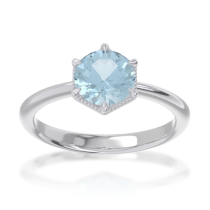
Aquamarine
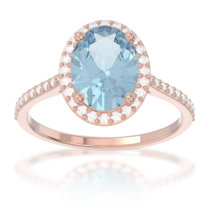
Mohs 7.5 to 8. Excellent toughness despite its shared hardness with emerald, because aquamarine is typically eye-clean and free of surface-reaching inclusions. Heat treatment is stable and permanent and does not require ongoing maintenance, unlike emerald oil treatment. Aquamarine is the March birthstone and is associated with calm, clarity, and the courage to begin new chapters, making it a deeply meaningful choice for an engagement ring. It also carries the tradition of something blue with considerably more visual impact. The connection to Diana’s aquamarine ring, worn publicly by Meghan Markle, has made it one of the most culturally recognized gemstone choices in recent years. Natural only.
Amethyst
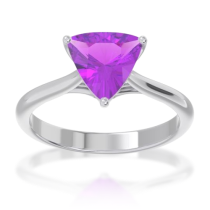
Mohs 7. The softest stone in this collection is commonly used in engagement rings. A protective setting is essential. Bezel and halo settings are strongly preferred over prong settings to shield the stone from direct impact. Amethyst is the February birthstone and has been associated with calmness, sincerity, and spiritual clarity across Greek, medieval European, and Catholic traditions. Its color range from pale lavender to deep violet offers significant variation in character. The affordability of amethyst allows the budget to be focused on an exceptional setting and metalwork rather than the stone itself. Natural only.
Garnet
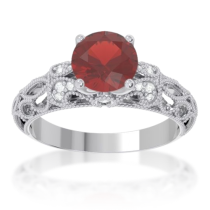
Mohs 6.5 to 7.5, depending on variety. Pyrope garnet, the classic deep red variety, sits at the higher end of this range. Garnet is the January birthstone and has been associated with devotion, vitality, and commitment since antiquity. It is often compared to ruby by buyers, but the stones are distinct minerals with different optical properties. Garnet is generally very affordable, making it an excellent choice for buyers who want a deep red stone with strong symbolic resonance at a more accessible price. Natural only.
Citrine
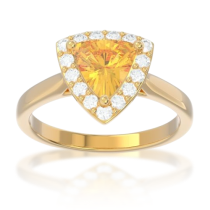
Mohs 7. The November birthstone. Golden yellow to orange-yellow in color, citrine pairs exceptionally well with yellow gold settings where the warmth of the metal and the warmth of the stone reinforce each other. Citrine is associated with warmth, joy, and abundance, and carries a distinctly optimistic symbolism, making it a meaningful and uplifting choice for an engagement ring. Heat treatment from amethyst is universal in the citrine market and stable. Natural only. Very affordable.
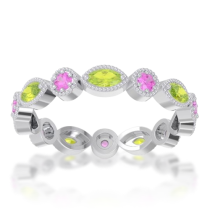
Peridot
Mohs 6.5 to 7. The August birthstone. Lime green to yellowish-green in color, peridot has a distinctive tone that is unlike any other common engagement ring gemstone. It is the only gemstone that forms in the Earth’s mantle rather than the crust, giving it a genuinely distinctive origin story that sets it apart from every other stone in this guide. Ancient Egyptians called it the gem of the sun and frequently confused it with emerald. A protective setting is essential. Natural only.
Natural vs Lab-Grown Gemstones for Engagement Rings
Lab-grown gemstones are not imitations or simulants. They are grown in controlled laboratory environments using the same chemical and physical processes that occur in nature. A lab-grown ruby is chemically, physically, and optically identical to a natural ruby. The difference is origin, not composition.
What Lab-Grown Means in Practice
Azeera offers both natural and lab-grown versions of blue sapphire, ruby, and emerald. Lab-grown stones of these types typically offer better clarity than their natural equivalents at the same price point, because the controlled growth environment produces fewer inclusions. For emerald specifically, lab-grown stones have better toughness than natural stones because they lack the jardin inclusions that create structural vulnerability in natural emerald.
The Premium for Natural Origin
Natural gemstones command a premium that reflects their geological rarity. An unheated natural ruby from Mogok in Myanmar commands a very significant premium over a lab-grown ruby of identical appearance. For buyers who value natural origin and documented provenance, this premium is justified. For buyers who prioritize the stone’s visual and physical properties above all else, lab-grown offers the same characteristics at a lower cost.
Neither Is a Compromise
The most important thing to understand is that choosing lab-grown is not a budget compromise. It is a different set of values and priorities. A lab-grown sapphire in a beautifully crafted Azeera setting is a fine piece of jewelry by any standard. A natural, unheated sapphire with a Gubelin certificate is rarer and more expensive, but not necessarily more beautiful to the eye. The decision is personal, and both choices are entirely valid.
What Azeera Offers
Azeera provides full disclosure of natural or lab origin for every gemstone. We are happy to discuss the specific characteristics of any stone, natural or lab-grown, before purchase. Both options are cut and set by hand in our NYC workshop to the same standards of craftsmanship.
Setting Styles for Gemstone Engagement Rings
The setting of a gemstone engagement ring serves two functions: securing the stone and presenting it to its best advantage. For colored gemstones, setting choice also affects how much protection the stone receives from daily wear and impact.
Solitaire
A solitaire setting features a single gemstone as the ring’s sole focus. For hard gemstones such as sapphire and ruby, a four-prong or six-prong solitaire is the most common and most elegant choice. It allows maximum light to enter the stone and shows the color and cutting quality to best advantage. For softer gemstones, a solitaire in a bezel setting offers the same clean aesthetic with significantly more protection.
Bezel
A bezel setting encircles the entire perimeter of the gemstone in a continuous band of metal. It offers the most protection of any setting style and is strongly recommended for softer gemstones, active wearers, and anyone who wants a low-maintenance ring. The aesthetic is clean, modern, and secure. The stone sits lower to the hand, which reduces snagging and impact risk.
Halo
A halo setting surrounds the central gemstone with a ring of smaller diamonds or accent stones. The halo increases the apparent size of the central stone and creates a striking contrast between the gemstone’s vivid color and the white sparkle of the surrounding diamonds. This is one of the most popular engagement ring styles on the market and works particularly well with blue sapphires and rubies.
Three-Stone
A three-stone setting features a central gemstone flanked by two side stones, traditionally representing past, present, and future. For colored gemstone engagement rings, a central ruby or sapphire flanked by two diamonds is one of the most timeless combinations in jewelry. Three-stone settings also allow for two complementary gemstones alongside the center stone.
Vintage and Art Deco
Many gemstone engagement ring buyers are drawn to vintage-inspired settings, and with good reason. Art Deco settings from the 1920s and 1930s were frequently designed around colored gemstones, particularly sapphires and rubies paired with old-cut diamonds. The geometric precision and ornate milgrain detailing of these styles complement the vivid color of colored gemstones exceptionally well.
East-West and Elongated Cuts
An increasingly popular choice is to orient an elongated stone, such as an oval or marquise cut, horizontally across the finger rather than vertically. This east-west orientation is distinctive, modern, and creates the visual impression of a wider stone on the hand. Elongated oval cuts in sapphire and aquamarine work particularly well in this orientation.
Metal Pairings: Which Metal Works Best?
The metal you choose affects how your gemstone’s color reads on the hand. The interaction between metal and gemstone is one of the most significant variables in the overall appearance of the ring.
White Gold and Platinum
White gold and platinum are neutral in color, which means they recede visually and allow the gemstone to hold all the attention. This works particularly well with blue sapphire, aquamarine, and peridot, where the cool or vivid green of the stone is reinforced by the metal’s cool neutrality. Platinum is the premium option: it is denser, does not require rhodium replating, and develops a natural patina over time that many wearers appreciate. White gold requires rhodium replating every one to two years to maintain its bright white finish. Azeera offers both in 14k and 18k white gold and platinum.
Yellow Gold
Yellow gold creates warmth and depth alongside a colored gemstone. For ruby, citrine, and garnet, yellow gold reinforces the warm tones of the stone. For blue sapphire, yellow gold creates a classic contrast that has been used in fine jewelry for centuries. The Diana sapphire ring is set in yellow gold. For amethyst, yellow gold adds warmth that softens the purple. For peridot, yellow gold intensifies the earthy lime-green in a very striking way. Azeera offers 14k and 18k yellow gold.
Rose Gold
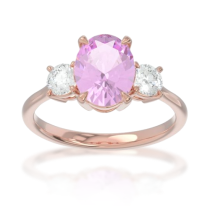
Rose gold suits softer, warmer gemstone tones. Amethyst in rose gold creates a romantic, harmonious palette. Light lavender amethyst in rose gold is one of the most cohesive pairings in colored gemstone jewelry. Rose gold also works well with lighter, pinkish-purple stones. For stones with cool or very saturated color, such as deep blue sapphire or vivid red ruby, rose gold can create a tonal clash that works against the stone’s best qualities. Azeera offers 14k and 18k rose gold.
The Meaning of Gemstone Engagement Rings
For buyers who want their engagement ring to carry a specific meaning, the choice of gemstone is one of the most expressive decisions in the entire process. The following is a summary of the primary symbolism associated with each stone Azeera carries.
- Blue Sapphire: Loyalty, faithfulness, truth, and enduring devotion. Associated with divine favor and sacred commitment across Greek, Persian, Buddhist, and Hindu traditions. September birthstone. Traditional gift for 5th and 45th wedding anniversaries.
- Ruby: Passionate love, vitality, courage, and protection. Considered the King of Gems across Hindu, Burmese, and European traditions. July birthstone. Traditional gift for 15th and 40th wedding anniversaries.
- Emerald: Growth, renewal, fertility, and new beginnings. Cleopatra’s stone. Associated with Venus in Roman tradition. May birthstone. Traditional gifts for 20th- and 35th-anniversary weddings.
- Aquamarine: Calm, clarity, courage, and new journeys. The sailor’s protective stone. Associated with the sea and with clear communication. March birthstone. Traditional gift for the 19th wedding anniversary.
- Amethyst: Sincerity, calm, spiritual clarity, and protection. Historically associated with royalty and with the Catholic church. February birthstone.
- Garnet: Devotion, vitality, protection, and commitment. Associated with safe travel and deep friendship. January birthstone. Traditional gift for the 2nd wedding anniversary.
- Citrine: Warmth, abundance, joy, and optimism. Known as the merchant’s stone in Chinese tradition. November birthstone. A traditional gift for the 13th wedding anniversary.
- Peridot: Strength, positive energy, and protection. Known as the gem of the sun in ancient Egyptian tradition. August birthstone. Traditional gift for the 16th wedding anniversary.
Budget Guide: What Does a Gemstone Engagement Ring Cost?
One of the most significant advantages of choosing a colored gemstone over a diamond is that the budget goes substantially further. The following ranges are indicative for natural, heat-treated stones of good to very good color and clarity in a standard solitaire or halo setting from Azeera. Unheated or certified origin stones command premiums well above these ranges.
Blue Sapphire
Good quality Ceylon heat-treated blue sapphire of 0.5 to 1 carat in a solitaire setting: approximately $1,200 to $2,500. Fine-quality pigeon-blood or Kashmir-origin sapphires: considerably higher. Unheated stones with certification command a significant premium over heated equivalents at every quality level.
Ruby
Good quality heat-treated ruby of 0.5 to 1 carat: approximately $1,000 to $3,000 depending on color purity and origin. Burmese pigeon blood rubies with no heat treatment are among the most expensive colored gemstones per carat in the world.
Emerald
Natural Colombian emerald of good color and acceptable jardin in a protective setting: approximately $1,500 to $3,500 for 0.5 to 1 carat. Lab-grown emerald of equivalent or better clarity and color: significantly more accessible in price.
Aquamarine
Aquamarine is generally excellent value relative to its visual impact. It forms in larger natural crystals than ruby or emerald, which means the price per carat remains relatively accessible even at high quality. A fine Santa Maria blue aquamarine of 1 to 2 carats is typically very affordable compared to the top-tier gemstones.
Amethyst, Garnet, Citrine, Peridot
These four gemstones offer striking color at very accessible price points, with the budget able to go toward craftsmanship and setting quality rather than the stone itself. For buyers who want a visually distinctive colored gemstone ring with resources concentrated in the design, any of these four is an excellent choice.
Caring for a Gemstone Engagement Ring
A gemstone engagement ring is worn daily for decades. A few consistent practices make a significant difference to how it looks and holds up over time.
Harder Stones: Sapphire, Ruby, Emerald, Aquamarine
Soak the ring in warm water with a few drops of mild dish soap for 10 to 15 minutes. Use a soft toothbrush to gently clean around the setting and under the stone, where dirt accumulates. Rinse thoroughly and pat dry with a lint-free cloth. This can be done weekly without any risk to the stone. Remove the ring before using harsh cleaning chemicals, swimming in chlorinated water, and applying perfumes or creams. Emeralds require oil treatment, which requires re-oiling by a professional jeweler every few years to maintain their appearance. Do not use ultrasonic cleaners on emerald.
Softer Stones: Amethyst, Garnet, Citrine, Peridot
The same basic cleaning routine applies, but with more attention to protecting the stone from impact. Remove the ring during activities that involve physical work, sport, or situations where it might receive a direct knock. These stones are more vulnerable to surface scratching over time from contact with hard surfaces and abrasive materials. Annual professional inspection and cleaning is strongly recommended.
Professional Inspection
Regardless of the gemstone, have the ring professionally inspected and cleaned once a year. The inspection checks that the setting remains secure and that no prongs or bezel edges have worn to a point where the stone is at risk of becoming loose. Azeera offers a lifetime warranty on manufacturing defects and free resizing for the first year.
Why Choose Azeera for a Gemstone Engagement Ring?
Azeera has been a family business for 75 years. Every ring is cut and set by hand in our New York City workshop by craftspeople who have spent careers working specifically with colored gemstones.
We source only from the top 1% of available stones. This means that every gemstone entering our workshop has been individually evaluated against strict color, clarity, origin, and treatment standards before it is selected. We do not purchase in bulk from brokers. We source individual stones.
We do not use stock photography. Every product image on our site shows the actual stone you are purchasing. What you see is exactly what you receive.
We provide full disclosure of origin and treatment status for every stone we sell. If a sapphire has been heat-treated, we say so. If a ruby is unheated and certified by Gubelin, we say that too. We believe buyers deserve this information before making one of the most significant jewelry purchases of their lives.
Our gemstone engagement rings are available in all seven metals we carry: 14k yellow gold, 18k yellow gold, 14k white gold, 18k white gold, platinum, 14k rose gold, and 18k rose gold. We also offer fully custom commission engagement rings if the design you want does not exist in our collection.
Browse our gemstone engagement ring collection, or read the individual guides for each stone to continue your research.
Frequently Asked Questions
Which gemstone is most durable for an engagement ring?
Blue sapphire and ruby are the most durable colored gemstones for daily wear, both rating 9 on the Mohs hardness scale with excellent toughness. They are second only to diamond in hardness and have no cleavage planes, making them resistant to both scratching and chipping under normal conditions. Aquamarine and emerald at 7.5 to 8 are very good choices, though emerald requires more care due to its natural inclusions. Amethyst, garnet, citrine, and peridot can be used in engagement rings but require protective settings and more attentive daily care.
Is a gemstone engagement ring less valuable than a diamond ring?
Not in any meaningful sense. Gemstone engagement rings typically cost less than comparable diamond rings, which means the budget goes further, rather than the ring being less valuable. The finest colored gemstones, such as unheated Burmese rubies or Kashmir sapphires, are rarer and more expensive per carat than comparable diamonds. And the symbolism, craftsmanship, and personal meaning of a well-chosen gemstone ring are not diminished by its price relative to a diamond.
What is the difference between natural and lab-grown gemstones?
Lab-grown gemstones are chemically, physically, and optically identical to natural gemstones. The difference is origin: natural gemstones are mined from the Earth over geological time, while lab-grown stones are produced in controlled environments using the same physical processes. Lab-grown stones typically offer better clarity at lower prices. Natural stones carry a premium that reflects their geological rarity and provenance. Neither choice is a compromise. Azeera offers both natural and lab-grown options for blue sapphire, ruby, and emerald.
Which gemstone has the strongest meaning for an engagement ring?
All gemstones carry meaning, and the strongest meaning is the one that resonates personally with the couple. That said, sapphire’s association with loyalty and faithfulness across thousands of years of cultural history makes it a particularly apt choice for an engagement ring. Ruby’s association with passionate love is equally long-standing. Emerald’s association with new beginnings and growth adds another powerful meaning to a ring that marks the start of a shared life.
Can you resize a gemstone engagement ring?
In most cases, yes, though the answer depends on the setting and the gemstone. Rings with a single center stone in a standard setting can usually be resized by one or two sizes in either direction by an experienced jeweler. Eternity-style bands with stones set all the way around cannot be resized without removing and replacing stones. Rings with heat-treated gemstones can generally be resized without risk. Always confirm your ring size before ordering.
What metal is best for a gemstone engagement ring?
The answer depends on the gemstone and personal preference. White gold and platinum allow the gemstone’s color to take all the visual attention and pair well with cool-toned stones such as blue sapphire and aquamarine. Yellow gold creates warmth and classical elegance, pairs particularly well with ruby, citrine, and garnet, and was historically the dominant metal for colored gemstone jewelry. Rose gold suits warmer-toned and lighter stones such as amethyst. Platinum is the most durable and low-maintenance option overall.
How do I know if a colored gemstone is high quality?
The most reliable indicators are vivid color that holds across different lighting conditions, no inclusions visible to the naked eye when viewed face-up, and a cut that distributes color evenly across the stone without large pale or dark areas. Certification from GIA, AGL, or Gubelin provides independent verification of quality, origin, and treatment status. Every Azeera gemstone is individually evaluated by our gemologists before selection, and we provide full disclosure of origin and treatment status for every stone we sell.
What is the most affordable gemstone engagement ring option?
Amethyst, garnet, citrine, and peridot all offer striking color at very accessible price points, with the budget able to go toward craftsmanship and setting quality. Among the four primary stones, aquamarine offers excellent value relative to its visual impact because it forms in larger natural crystals and does not command the scarcity premium of sapphire, ruby, or emerald. Lab-grown sapphire, ruby, and emerald also offer excellent color and clarity at lower prices than their natural equivalents.