TLDR
- Durability: Garnet rates 6.5 to 7.5 on the Mohs hardness scale, depending on variety. This puts it in a similar category to amethyst and requires a protective setting and attentive daily care for an engagement ring worn daily. With the right setting and reasonable habits, garnet is an appropriate and beautiful choice.
- Varieties: Garnet is not a single stone but a family of related minerals with significantly different color profiles. Pyrope and almandine produce deep red. Rhodolite produces a vivid raspberry red to purple-red. Spessartine produces orange to orange-red. Tsavorite produces vivid green. Demantoid produces bright green with exceptional brilliance. The variety determines the color character.
- Garnet vs Ruby: Garnet and ruby are entirely different minerals that happen to produce similar red colors. Ruby is significantly harder at Mohs 9, significantly rarer at fine quality, and commands much higher prices. Garnet offers a deep, beautiful red at a far more accessible price. The right choice depends on whether durability, rarity, and investment value are the priority, or accessibility and design budget.
- Color: The most important quality factor. For red garnets, look for vivid saturation without excessive darkness. The ideal is a rich, clear red that holds its color across different lighting conditions. Rhodolite is generally considered the most vivid and most commercially appealing variety for engagement rings.
- Metals: Yellow gold is the most harmonious pairing for deep red garnets, reinforcing warmth and depth. Rose gold suits rhodolite’s raspberry-red tones particularly well. White gold and platinum create a high contrast that works best with the most vivid stones.
- Meaning: Garnet has been associated with devotion, vitality, protection, and the bonds of deep friendship and love for thousands of years. It is the January birthstone and the traditional gift for the 2nd wedding anniversary. Its name comes from the Latin granatum, meaning pomegranate seed, for the resemblance of certain garnets to the vivid red seeds of the fruit.
- Azeera: Every garnet is individually evaluated for color quality, variety, and clarity before entering our NYC workshop. Natural only. Full disclosure on every stone.
Garnet is one of the oldest gemstones in the human record. Archaeological evidence of garnet jewelry dates back more than five thousand years, with examples found in ancient Egyptian tombs and among the personal ornaments of Bronze Age European burial sites. In ancient Rome, garnet was one of the most widely traded gemstones in the known world, used in signet rings, intaglios, and personal jewelry across the full social spectrum from the imperial court to the middle classes. No other red stone has been as continuously valued across as long a span of human history.
A garnet engagement ring occupies a specific and genuinely appealing position in the colored gemstone market. It offers a deep, vivid red that is immediately beautiful without the rarity premium of ruby. Its symbolism of devotion, protection, and deep friendship is directly relevant to the act of engagement. And its accessibility means the budget can go toward an exceptional setting and metalwork rather than just stone.
There are two things buyers researching garnet engagement rings want to know above all others. The first is how garnet compares to ruby, since both produce red and buyers naturally encounter both in their research. The second is whether garnet is durable enough for a ring worn every day. This guide addresses both directly and honestly, along with everything else needed to make a confident decision.
If you are still comparing garnet to other gemstone options, our complete guide to gemstone engagement rings covers every stone side by side. If you are ready to focus on garnet, read on.
Why Choose a Garnet Engagement Ring?
A Red With Thousands of Years of History
Garnet’s deep red color has been valued continuously across more cultures and more centuries than almost any other gemstone. Ancient Egyptian jewelry makers incorporated garnet into some of the finest pieces of the pharaonic period. Roman craftsmen carved garnet into intaglios and set it in gold for the rings of senators and generals. Medieval European jewelry makers used garnet extensively in cloisonne enamel work and as centerpiece stones in ecclesiastical and royal pieces. The garnet engagement ring does not borrow from a fashionable trend. It draws on a tradition of red gemstone jewelry that predates written history.
Deep Red at an Accessible Price
Fine quality ruby commands prices that reflect its genuine rarity, and those prices have risen substantially over the past two decades as demand for fine colored gemstones has grown. Garnet offers a deep, rich red at prices that allow the full design of the ring, including the setting, metalwork, and overall craftsmanship, to receive the attention and resources that make a fine jewelry piece genuinely exceptional. For buyers who want a beautiful red engagement ring and prioritize design quality and craft over stone rarity, garnet is one of the strongest choices on the market.
The January Birthstone
Garnet is the January birthstone, one of the most widely recognized birthstone associations. For buyers with a January birthday or anniversary, the personal connection to the stone adds a dimension of meaning that no other choice can provide. The January birthstone association also gives garnet an immediate recognizability and a ready conversation point that many engagement ring wearers appreciate.
A Diverse Family With Remarkable Variety
Unlike ruby, which produces one specific color in one specific mineral, garnet is a family of related minerals that collectively produce one of the widest color ranges of any gemstone group. Deep blood red, vivid raspberry, orange-red, bright orange, vivid green, and even color-changing varieties all occur within the garnet family. A buyer who comes to Garnet looking for deep red and discovers the vivid raspberry of rhodolite or the extraordinary green of tsavorite is exploring one of the most genuinely varied families in the gemstone world.
A Symbol of Devotion and Enduring Friendship
Garnet’s symbolism across cultures is coherent and deeply fitting for an engagement ring. In virtually every tradition that has valued the stone, it has been associated with deep, protective, and enduring bonds between people. It is not the stone of passionate new love that is ruby’s territory. It is the stone of devotion, fidelity, and the kind of committed love that protects and sustains. For couples who want their ring to carry that specific meaning, garnet speaks with unusual directness.
Garnet Varieties: Which One Is Right for You?
Garnet is not a single mineral but a group of closely related silicate minerals that share the same crystal structure but vary in chemical composition. This variation in chemistry produces genuinely different gemstones with distinct color profiles and slightly different physical properties. Understanding the main varieties helps buyers identify which garnet is being discussed when they see a stone described simply as ‘garnet’.
Pyrope Garnet
Pyrope is the classic deep red garnet, producing a rich, blood-red to dark red color that has been valued since antiquity. The name comes from the Greek for fire-eyed, reflecting the intense red that characterizes fine pyrope. Bohemian garnets, the small, deep red stones set in clusters and pavé designs in 19th-century European jewelry, are predominantly pyrope. Fine pyrope can approach ruby-like redness at its best, though it typically shows a more pure red, without ruby’s slight blue-violet undertone. Hardness ranges from approximately 7 to 7.5 on the Mohs scale.
Almandine Garnet
Almandine is the most common garnet variety commercially and produces a deep red to reddish-brown color. It is generally darker and browner than pyrope at lower quality levels, which is why almandine has historically been used as a less prestigious option in commercial jewelry. At fine quality levels with good color, almandine can produce an attractive deep red, but the risk of excessive darkness is higher than with pyrope or rhodolite. Hardness is approximately 7 to 7.5 on the Mohs scale.
Rhodolite Garnet
Rhodolite is a variety that lies between pyrope and almandine in chemical composition and produces a vivid raspberry-red to purplish-red color, distinct from both. The name comes from the Greek for rose-colored stone, and fine rhodolite has a clarity and vividness that many gemologists consider the most commercially appealing of the red garnet varieties. The color is lighter and more saturated than deep almandine, with a pinkish-purple quality that photographs exceptionally well. For buyers who want a vibrant, vivid red-purple garnet for an engagement ring, rhodolite is the strongest choice. Hardness is approximately 7 to 7.5 on the Mohs scale.
Spessartine Garnet
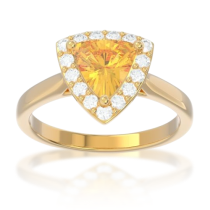
Spessartine produces a vivid orange to orange-red color, sometimes described as mandarin orange at the finest quality levels. Fine spessartine from Namibia and Nigeria is among the most vivid orange gemstones available, commanding significant premiums at top quality. For buyers who want an orange engagement ring stone rather than red, spessartine is the most compelling option in the garnet family.
Tsavorite Garnet
Tsavorite is a green garnet, specifically a grossular variety colored by chromium and vanadium, which produces a vivid, bright green that rivals fine emerald in intensity. Fine tsavorite is genuinely rare and commands premium prices. It is a Mohs 7 to 7.5 stone with good toughness. For buyers seeking a vivid green gemstone engagement ring with greater toughness than natural emerald offers, yet with no treatment requirements, tsavorite is an outstanding choice.
Demantoid Garnet
Demantoid is one of the most extraordinary gemstones in the garnet family. An andradite variety, it produces a brilliant, bright green with dispersion higher than that of a diamond, meaning it splits white light into the spectrum more intensely than any other commonly available gemstone. Fine demantoid from Russia’s Ural mountains is among the rarest and most valuable garnets in the world. It is softer than most garnets at approximately Mohs 6.5, which requires particularly protective settings for engagement ring use, but its extraordinary optical properties make it one of the most magnificent gemstones for buyers who encounter it.
Garnet vs Ruby: The Comparison Every Buyer Makes
The comparison between garnet and ruby is the one that comes up most consistently in buyer research for garnet engagement rings. Both produce red. Both have deep historical associations. Both are set in gold engagement rings that photograph beautifully. The question is which is the right choice, and the honest answer is that they are genuinely different stones suited to different buyer priorities.
The Fundamental Difference
Garnet and ruby are entirely different minerals that happen to overlap in color. Ruby is the red variety of corundum, the mineral that also produces blue sapphire. Garnet is a distinct silicate mineral family with its own crystal structure and chemical composition. They share a similar visual territory in deep red but are not related gemologically.
Hardness and Durability
Ruby rates 9 on the Mohs hardness scale with excellent toughness. It is the second hardest gemstone used in jewelry and one of only two colored stones recommended for engagement rings without setting restrictions. Garnet rates 6.5 to 7.5 depending on variety. This is a meaningful difference for a ring worn daily. A ruby engagement ring can be worn essentially without restriction with standard care habits. A garnet engagement ring requires a protective setting and more deliberate wear habits. For buyers who want the most carefree daily-wear experience with a red stone, ruby is the more practical choice.
Color
Fine ruby has a color quality that garnet does not replicate: the chromium fluorescence that gives the finest rubies a luminous, self-lit quality, intensifying in sunlight and creating a vivid red that photography has never quite captured. Rhodolite garnet produces a vivid raspberry-red that is genuinely beautiful and distinctive in its own right, but it does not have ruby’s specific chromium fluorescence. At the finest quality levels, ruby’s color is considered the benchmark against which all other red stones are measured.
Rarity and Value
Fine quality ruby is genuinely rare and has become increasingly expensive over the past decade. Fine unheated Burmese rubies are among the most valuable gemstones per carat in the world. Garnet is significantly more affordable, which is precisely its commercial advantage. A buyer who allocates a significant budget to a garnet ring can afford a stone of exceptional size and color quality, a setting of real craft and distinction, and metalwork that elevates the piece into fine jewelry. The same budget applied to Ruby might produce a smaller, more modest result.
The Right Choice
For buyers who prioritize durability for unrestricted daily wear, rarity, chromium fluorescence, and long-term investment value, ruby is the right choice. For buyers who want a beautiful red engagement ring and want the budget to go toward design excellence, a larger stone, or simply a more accessible price point, garnet is entirely appropriate and genuinely lovely. The choice reflects priorities rather than a quality hierarchy.
Garnet Durability: The Honest Assessment
The durability question is the one that generates the most research anxiety among garnet engagement ring buyers, and it deserves the same direct treatment as amethyst in the previous guide.
Garnet rates 6.5 to 7.5 on the Mohs hardness scale, depending on variety. This range matters. A demantoid at 6.5 is meaningfully softer than a rhodolite or pyrope at 7 to 7.5. The variety of garnets in your ring is worth knowing.
At Mohs 6.5 to 7.5, garnet sits at and slightly below the quartz threshold of 7. Quartz is a component of common dust and sand, so everyday contact with dusty surfaces can cause microabrasion on a garnet’s surface over time. This is a slow and gradual process, but it is real, and it is the reason gemologists are cautious about recommending very soft garnets for daily wear rings without qualification.
Toughness
On the positive side, garnet generally has good toughness. Most garnet varieties lack pronounced cleavage planes, making them less vulnerable to directional impact. The risk profile for garnet is primarily hardness-related surface abrasion rather than toughness-related chipping, which means a protective setting that prevents abrasive contact is the most effective mitigation.
The Setting Solution
As with amethyst, the right setting substantially compensates for garnet’s lower hardness. A bezel setting that encircles the stone’s perimeter in continuous metal is the most protective choice, significantly reducing abrasive contact. A halo setting provides additional protection at the stone’s edges through the surrounding diamonds. Both are strong and appropriate choices for a garnet engagement ring intended for daily wear.
High-prong solitaire settings that elevate the stone well above the band expose the garnet to the greatest surface area and are not recommended. Low-profile settings and protective settings are the right approach for this stone.
The Daily Habit Commitment
Buyers who wear garnet engagement rings successfully over many years share one consistent habit: they remove the ring before activities involving significant physical impact, abrasion, or hard contact with surfaces. Gardening, heavy household work, sport, and similar activities are the scenarios where hardness matters most. For the full range of office wear, social occasions, and most of daily life, a well-set garnet ring is appropriate and beautiful. The commitment is specific and manageable.
Understanding Garnet Color
For red garnets, the most common choice for engagement rings, color evaluation follows the same principles as for other colored gemstones: hue, tone, and saturation.
Hue
The most desirable hue for a red garnet engagement ring is a pure red to a slightly purplish red. Pyrope achieves this profile at its best. Rhodolite consistently produces a vivid raspberry-red to purplish-red that many buyers find more appealing than the deeper, darker almandine. Stones with excessive brown or orange modifiers are considered less desirable, though personal taste matters.
Tone
Tone is how light or dark the red reads. The greatest challenge with many red garnets, particularly almandine, is excessive darkness. A stone that is too dark appears near-black in low light, losing the vivid red entirely. The ideal tone for an engagement ring garnet is medium to medium-dark, with rich, full red that doesn’t go dark or lose color in typical indoor lighting. Rhodolite, with its naturally lighter, more vivid character, is often the easiest variety to find at the right tone.
Saturation
Saturation is the richness or intensity of the red. Vivid, well-saturated garnets deliver the most visual impact and are the most appropriate for an engagement ring centerpiece. Stones with weak saturation look dull or brownish. When evaluating garnets, look for color that holds its richness in natural daylight and under warm indoor lighting. A stone that looks vivid only under strong direct light is likely undersaturated for daily wear.
Rhodolite as the Benchmark
Among the red garnet varieties, rhodolite is most consistently praised for engagement ring use because its natural color profile, a vivid raspberry red to purplish-red at medium tone, avoids the two most common red garnet pitfalls of excessive darkness and brownish modifiers. If you are evaluating red garnets for an engagement ring without a strong variety preference, rhodolite is the most reliable starting point.
What Does a Garnet Engagement Ring Mean?
Garnet’s name comes from the Latin granatum, meaning “pomegranate seed,” for the resemblance of deep red garnet crystals to the fruit’s vivid seeds. This etymology is more than a linguistic curiosity. The pomegranate has been a symbol of fertility, abundance, and the deep bonds of love and obligation across Mediterranean, Middle Eastern, and Asian cultures for thousands of years. The naming of garnet after this fruit connects the stone’s symbolism to a very ancient tradition of representing devoted, fruitful, and enduring relationships.
In ancient Rome, garnet was one of the most widely used gemstones for signet rings, which were not merely decorative but also served as personal seals to authenticate documents and letters. The stone that a Roman chose for his signet ring was an expression of his identity and his commitments. Garnet was consistently chosen for this purpose across centuries, reflecting the stone’s associations with trustworthiness, protection, and the enduring bonds of loyalty.
In medieval Europe, garnet was believed to protect travelers and strengthen the bonds between separated friends and lovers. It was given as a parting gift to ensure safe return and as a symbol of the fidelity of the person who gave it. The stone’s red color, associated with blood and the vital force of the heart, naturally linked it to the bonds of love and commitment that sustain relationships through separation and hardship.
In Hindu tradition, garnet is associated with the base chakra, representing physical vitality, groundedness, and the protective force of deep commitment. It is considered a stone that strengthens and stabilizes the bonds of a relationship rather than inflaming new passion.
For an engagement ring, garnet’s symbolism is most directly fitting for couples who want to express a commitment that is grounded, protective, and devoted rather than passionate and urgent. It is the stone of the relationship, with substance and depth. Garnet is the January birthstone and the traditional gift for the 2nd wedding anniversary, associated with the growing solidity and trust of a relationship that has weathered its first years together.
Setting Styles for a Garnet Engagement Ring
Setting choice is important for garnet for the same reason it is for amethyst: the right setting actively compensates for the stone’s moderate hardness by reducing the exposure of the stone’s surface and edges to abrasive contact.
Bezel Setting
A bezel setting is the strongest recommendation for a garnet engagement ring. A full bezel encircles the entire perimeter of the stone in a continuous band of metal, protecting the girdle from lateral impact and edge contact, which cause the most damage to softer stones. The stone sits close to the hand, minimizing snagging and contact with hard surfaces. The visual effect is clean and modern, and garnet’s deep red color is beautifully framed by metal rather than exposed on all sides. An oval or round garnet in a bezel setting in yellow gold is one of the most elegant and most practically sound options for daily wear.
Halo Setting
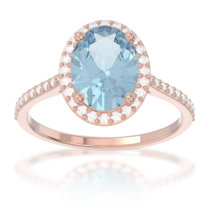
A halo setting surrounds the central garnet with a ring of smaller diamonds, providing additional protection at the stone’s edges while dramatically increasing its visual presence. The contrast between the deep red of the garnet and the white sparkle of the surrounding diamonds is immediately striking. Halo settings for garnet in yellow gold have a strong historical precedent in Victorian jewelry, where garnet halos in gold were among the most popular engagement and betrothal ring styles of the period.
Three-Stone Setting
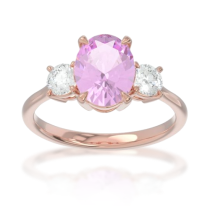
A three-stone setting places the garnet at the center, flanked by two side stones that traditionally represent past, present, and future. A central garnet with two diamond side stones creates a clean composition with strong contrast between the deep red center and the flanking white stones. The side stones provide some lateral support for the center stone. This setting works well with oval and cushion cut garnets, where the horizontal line of the three stones creates an elegant presentation.
Low-Profile Prong Setting
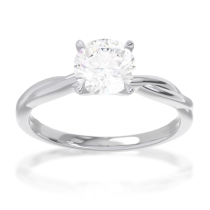
A prong setting with short, low-profile prongs that hold the stone close to the band is achievable for garnet for buyers who prefer the open aesthetic of a prong setting. The key is ensuring the prongs are not so tall that they elevate the stone significantly above the hand, which would increase surface exposure. A four-prong low solitaire in yellow gold with a round or oval garnet, worn with attentive daily habits, is an appropriate option for buyers committed to the maintenance it requires.
Victorian and Antique Styles
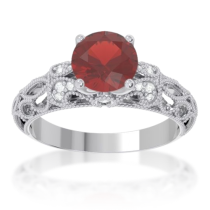
Garnet has a particularly strong association with Victorian fine jewelry, where it appeared extensively in cluster rings, large central stones set in elaborate gold surrounds, and pavé designs using small Bohemian garnets. Buyers drawn to period aesthetics will find garnet among the most historically resonant and appropriate choices for a Victorian or antique-inspired engagement ring. The stone’s history in this period is well documented, and the design language of Victorian garnet jewelry is rich and immediately recognizable.
Choosing the Right Metal for a Garnet Engagement Ring
Metal choice significantly affects how garnet’s deep red reads on the hand. The stone’s warm, rich color responds well to warm metals and creates strong contrast with cool neutral metals.
Yellow Gold
Yellow gold is the most harmonious and most historically traditional choice for garnet engagement rings. The warm tone of yellow gold reinforces the red’s warmth, creating a rich, unified palette that reads as confident and classical. Yellow gold absorbs the orange and brown modifiers that can be present in some garnet varieties, making stones with slight warmth appear more purely red than they would against white metal. Most historical garnet engagement and betrothal rings, particularly from the Victorian period, are set in yellow gold for exactly this reason. Azeera offers 14k and 18k yellow gold.
Rose Gold
Rose gold suits rhodolite and other purplish-red garnets particularly well. The pinkish warmth of rose gold harmonizes with rhodolite’s raspberry-red, creating a romantic, richly colored composition. For deep red garnets with strong saturation, rose gold adds warmth and depth without competing with the stone’s color. For buyers who want a contemporary, romantic look with garnet, rose gold is an excellent choice. Azeera offers 14k and 18k rose gold.
White Gold and Platinum
White gold and platinum create the highest contrast with garnet’s red, making the color appear more vivid and graphic against the cool neutral metal. This works best with garnets of the finest, most saturated color, particularly rhodolite stones of exceptional clarity and vividness. For stones with any brownish or orange warmth to their red, white metal can emphasize these modifiers rather than absorbing them. Platinum is the most durable and low-maintenance metal option. White gold requires rhodium plating every one to two years. Azeera offers 14k and 18k white gold and platinum.
Caring for a Garnet Engagement Ring
Garnet, like amethyst, requires attentive daily care to maintain its appearance over many years of daily wear. The requirements are specific and manageable.
Daily Habits
Remove the ring before heavy physical work, gardening, sports, and any activity where the ring might come into contact with hard surfaces with significant force. Apply perfumes, hand lotions, and hairspray before putting the ring on rather than after. Remove the ring before swimming in chlorinated pools and before using harsh household cleaning products. Store the ring separately from harder gemstones, including sapphire, ruby, and diamond, which can scratch garnet’s surface.
Cleaning at Home
Soak the ring in warm water with a few drops of mild dish soap for 10 to 15 minutes. Use a very soft brush to gently clean around the setting and under the stone. Rinse thoroughly and pat dry with a lint-free cloth. Avoid ultrasonic cleaners, which can stress the stone over repeated use, particularly for demantoid, which has a fiber-like inclusion called horsetail that makes it particularly sensitive to ultrasonic vibration. The warm-water and mild-soap routine is safe and effective for weekly use with all garnet varieties.
Professional Care
Have the ring professionally inspected and cleaned once a year. The inspection checks that the setting remains secure and that prong tips or bezel edges have not worn to the point of putting the stone at risk. For a ring worn daily, annual inspection is a straightforward precaution. Azeera offers a lifetime warranty on manufacturing defects and free resizing for the first year after purchase.
Why Choose Azeera for Your Garnet Engagement Ring?
Azeera has been a family business for 75 years. Every ring is cut and set by hand in our New York City workshop. We source individual stones evaluated against strict standards for color quality, variety, clarity, and visual presence. For garnet, color is the primary quality variable, and variety identification is a significant factor in the buyer’s decision.
The difference between a well-saturated rhodolite garnet and a dark, brownish almandine is enormous at eye level, and it is not always visible from a product photograph alone. We evaluate every garnet individually for color saturation, tone, and hue purity. Stones that are excessively dark or carry heavy brown modifiers are not appropriate for a fine engagement ring centerpiece, regardless of their size, and we do not accept them.
We do not use stock photography. Every product image on our site shows the actual stone you are purchasing. The red you see in the photograph is the red of the specific stone that will arrive on your finger. For a gemstone where color varies as much as it does across garnet varieties and quality levels, this transparency is essential.
We are also direct about durability. We will not suggest that garnet is equivalent to sapphire or ruby for unrestricted daily wear, because it is not. We will help you choose the right setting for your lifestyle and explain clearly which care habits will keep your garnet ring looking its best for decades.
Our garnet engagement rings are available in all seven metals: 14k and 18k yellow gold, 14k and 18k white gold, platinum, and 14k and 18k rose gold. We also offer fully custom commission engagement rings for buyers with a specific variety, color profile, or design preference in mind.
Browse our garnet engagement ring collection to begin. And if you are still comparing garnet to other options, our complete guide to gemstone engagement rings covers every stone we offer in detail.
Frequently Asked Questions
Is garnet durable enough for daily wear as an engagement ring?
Yes, with the right setting and deliberate care habits. Garnet rates 6.5 to 7.5 on the Mohs hardness scale, depending on variety. At this hardness, prolonged contact with quartz dust can cause surface microabrasion, and the stone requires a protective setting for daily wear. A bezel or halo setting that protects the stone’s edges is strongly recommended over a high-prong solitaire. Removing the ring during heavy physical activity and gardening is the other essential precaution. Buyers who choose protective settings and develop these habits maintain their garnet rings well over many years. Those who wear high prong settings without restriction are the ones who encounter problems.
What is the difference between garnet and ruby?
Garnet and ruby are entirely different minerals that happen to produce similar red colors. Ruby is the red variety of corundum, a mineral in the same family as blue sapphire, and rates 9 on the Mohs hardness scale, with excellent toughness. Garnet is a distinct silicate mineral family rating 6.5 to 7.5 on the Mohs scale. Ruby is significantly harder and significantly rarer in fine quality, and it commands much higher prices. Garnet offers a beautiful red at a more accessible price point. Fine ruby also has chromium fluorescence, giving the finest stones a luminous quality that garnet does not replicate. The right choice depends on whether durability, rarity, and investment value, or an accessible price and design budget, are the primary considerations.
What does a garnet engagement ring mean?
Garnet has been associated with devotion, protection, vitality, and the enduring bonds of deep love and friendship for thousands of years across Roman, medieval European, and Hindu traditions. Its name comes from the Latin for pomegranate seed, connecting it to ancient symbolism of fertility, abundance, and committed relationships. In medieval Europe, it was given as a parting gift to ensure safe return and as a symbol of fidelity. In Hindu tradition, it is associated with physical vitality, groundedness, and the stabilizing force of deep commitment. An engagement ring symbolizes a love that is grounded, devoted, and enduring rather than simply passionate. It is the January birthstone and the traditional gift for the 2nd wedding anniversary.
What is rhodolite garnet, and why is it recommended for engagement rings?
Rhodolite is a garnet variety that lies chemically between pyrope and almandine and produces a vivid raspberry-red to purplish-red color that is distinct from both. It is generally considered the most visually appealing of the red garnet varieties for engagement ring use because its naturally lighter, more saturated color avoids the two most common red garnet problems: excessive darkness that makes the stone read as near-black in low light, and brownish modifiers that make the red appear muddy. Rhodolite’s vivid raspberry-red photographs exceptionally well and holds its color effectively across natural daylight and indoor lighting.
Which metal pairs best with a garnet engagement ring?
Yellow gold is the most harmonious and most historically traditional choice for garnet engagement rings. The warm tone of yellow gold reinforces the red’s warmth and absorbs any orange or brown modifiers in the stone, making the red appear more vivid. Most historical garnet engagement rings are set in yellow gold for exactly this reason. Rose gold is an excellent choice for rhodolite and other purplish-red garnets, where its pinkish warmth creates a harmonious, romantic palette. White gold and platinum create a high contrast that works best with stones of the finest, most saturated color.
Can a garnet engagement ring be cleaned in an ultrasonic cleaner?
With caution and knowledge of the specific variety. Most red garnets, including pyrope, almandine, and rhodolite, can tolerate ultrasonic cleaning in good condition. Demantoid garnet is a specific exception: it contains fiber-like inclusions called horsetail that make it particularly sensitive to ultrasonic vibration and it should never be cleaned this way. When in doubt, warm water and mild dish soap applied with a very soft brush is the safe and effective cleaning method for all garnet varieties.
How does garnet compare to amethyst for an engagement ring?
Both garnet and amethyst are in a similar hardness range, 6.5 to 7.5 for garnet and 7 for amethyst, and both require protective settings and attentive daily care for engagement ring use. The key differences are color and symbolism. Garnet produces red, and amethyst produces purple. Garnet’s symbolism centers on devotion, protection, and enduring bonds. Amethyst’s symbolism centers on calm, clarity, and spiritual connection. Both are appropriate engagement ring choices for buyers who understand the stone’s character. The choice between them is primarily a matter of which color and which meaning resonate most personally.
How much does a garnet engagement ring cost?
Garnet is one of the most accessible colored gemstones in the fine jewelry market. A well-cut garnet of excellent color, whether pyrope, rhodolite, or almandine, is significantly more affordable per carat than sapphire, ruby, or emerald, which means the budget can be allocated toward a setting of genuine craft and distinction. An Azeera garnet engagement ring in a well-designed bezel or halo setting, in yellow or rose gold, is typically very accessible compared to comparable rings in more prestigious gemstones. For buyers who want a beautiful, well-crafted red engagement ring and want the design to receive the full attention of the budget, garnet offers exceptional value.