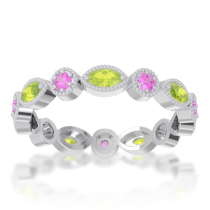
What to Look Out For (And How Azeera Sets the Standard)
In today’s convenience-first world, big-box retailers like Costco, Walmart, and Amazon are increasingly offering gemstone jewelry at enticing prices. But a common and crucial question persists:
Are the gemstones sold at these stores real?
Let’s break down the reality behind mass-market gemstones and guide you on how to verify authenticity, understand quality, and make informed jewelry purchases that last.
TL;DR: The Short Answer
Yes, many gemstones from big-box retailers like Costco are technically real—meaning they are naturally formed or lab-created stones. However, these retailers often lack:
- Transparency around treatments
- Detailed sourcing information
- Custom craftsmanship
- Premium-grade stone quality
By contrast, boutique brands like Azeera focus on ethically sourced, fully traceable, untreated or minimally treated stones—with personalized quality control at every step.
What Does “Real” Gemstone Mean?
The term “real” can be misleading in the jewelry industry. There are three major categories of gemstones to be aware of:
- Natural gemstones—mined from the earth, often treated to enhance color or clarity.
- Lab-created gemstones – Chemically identical to natural gems, but grown in labs.
- Simulants or imitations—look like the real thing (like cubic zirconia) but have different compositions.
Big-box stores may sell all three—often without clearly disclosing which.
The Hidden Truth: Quality Grading Is Rarely Shared
Large retailers usually don’t provide:
- Origin information (e.g., Sri Lankan sapphire vs. industrial sapphire)
- Cut quality metrics
- Treatment disclosure (e.g., heat-treated, fracture-filled)
That makes it difficult for consumers to assess what they’re getting—especially when buying online or from a display case.
Why Transparency Matters
Buying a gemstone is a deeply personal and often emotional investment. You deserve to know:
- Where the gem came from
- How it was cut and polished
- What treatments (if any) were applied
This is precisely why Azeera provides complete transparency—from mine to market.
How Azeera Does It Differently
Azeera isn’t just another jewelry brand. Here’s how we stand apart:
| Criteria | Azeera | Big Retailers |
| Stone Authenticity | Verified, conflict-free, ethically sourced | Often undisclosed |
| Treatment Disclosure | Full transparency | Rarely disclosed |
| Craftsmanship | Handcrafted in the U.S. | Mass-produced overseas |
| Customization | Fully customizable | Limited to preset designs |
| Support | GIA-trained experts available | Limited jewelry knowledge |
Red Flags to Watch For When Shopping at Big-Box Retailers
- No information on gem origin
- No grading report or certificate
- Overuse of terms like “genuine” or “precious” without specifics
- Suspiciously low pricing
- Lack of professional support staff (e.g., no gemologists)
What Should You Look For When Buying a Gemstone?
✔ Clear origin and treatment info
✔ Certification (GIA or IGI)
✔ Transparent pricing
✔ Return or exchange policy
✔ Artisan-quality craftsmanship
Azeera checks all these boxes—and more.
The Bottom Line
Big-box stores may offer attractive pricing but often sacrifice quality, transparency, and individuality. When buying a gemstone—especially for engagement rings, heirloom pieces, or luxury gifts- it pays to invest in a jeweler who values craftsmanship and clarity as much as you do.
At Azeera, you don’t just buy jewelry; you own a story.
FAQ
Q: Are Costco diamonds and gemstones fake?
A: No, they are often real, but the quality and sourcing are usually not disclosed.
Q: Can I trust lab-created gemstones?
A: Absolutely, if disclosed honestly. Lab gems can be a sustainable, affordable choice.
Q: What certifications should I ask for?
A: GIA or IGI certificates ensure reliable grading for both diamonds and colored gemstones.
Q: Does Azeera offer certified stones?
A: Yes. We offer full certification and clarity on origin, treatment, and value.