TLDR
Aquamarine is a variety of beryl that rates 7.5 to 8 on the Mohs hardness scale. Unlike emerald, which is also beryl, aquamarine is typically eye-clean with no jardin, which makes it more straightforward to select and more forgiving to wear daily. Its colour ranges from pale sky blue to a vivid blue-green, with the purest medium blue considered the finest. It does not require oil treatment, so care is simpler than for emerald. The main precautions are avoiding ultrasonic cleaners, harsh chemicals, and extreme heat. Aquamarine pairs most naturally with white gold and platinum, which let the cool blue of the stone read without interference. Azeera hand-sets every aquamarine in our NYC workshop and selects stones individually for colour depth and clarity.
Introduction
Aquamarine has a quality that is genuinely difficult to find in other gemstones: it looks like light itself has been captured inside the stone. The pale, clear blue of a fine aquamarine does not demand attention the way an emerald or ruby does. It earns it quietly, with a transparency and depth that rewards the longer you look at it.
The name comes directly from the Latin aqua marina, meaning sea water. It is an accurate description. The colour range of aquamarine covers the full spectrum of what water looks like from different distances and in different light conditions, from the pale clarity of a shallow tropical lagoon to the deeper, more saturated blue-green of open ocean. That connection to water is not just visual. It runs through the stone’s entire history, across cultures and centuries, and it gives aquamarine a symbolic richness that makes it particularly suited to the context of a wedding ring.
Aquamarine is also, practically speaking, one of the best-value gemstone choices for a wedding band. It is genuinely rare in fine quality, but it occurs in larger crystals than most coloured gemstones, which means you can achieve meaningful size without the price escalation that applies to ruby or fine emerald. It is eye-clean as a matter of course rather than exception. And unlike emerald, it requires no oil treatment, which simplifies both care and the purchase decision. If you’re still deciding which gemstone is right for you, our [complete guide to gemstone wedding rings] covers every option side by side.
This guide covers everything you need to know before choosing an aquamarine wedding band, from what gives the stone its colour to how to select a setting that will protect it for a lifetime of daily wear.
What Is Aquamarine?
Aquamarine is a variety of the mineral beryl, which places it in the same family as emerald. The difference between them is the trace element responsible for the colour. Emerald gets its green from chromium and vanadium. Aquamarine gets its blue from iron. Specifically, ferrous iron produces the blue tone, and ferric iron produces yellow or green. The ratio of these iron states within the crystal determines whether a stone reads as pure blue, blue-green, or greenish-blue.
Unlike emerald, aquamarine typically forms without significant inclusions. It is what gemologists classify as a Type I stone, meaning inclusions are not expected and eye-clean specimens are the norm rather than the exception. This is one of aquamarine’s most practical advantages as a choice for a wedding ring: you are not navigating the tradeoffs around jardin that emerald requires. A quality aquamarine should be visually clean when viewed face-up with the naked eye, and that is a standard the vast majority of natural aquamarines meet.
Most aquamarine on the market has been heat-treated. Heating converts the ferric iron in the crystal to ferrous iron, removing greenish or yellowish tones and producing the pure blue most valued. The treatment is stable, permanent, and does not affect the stone’s durability in any way. Unlike the oil treatment used for emerald, heat treatment in aquamarine does not require ongoing maintenance or special cleaning precautions beyond the standard care for any gemstone.
The world’s finest aquamarines come from Brazil, which has produced some of the largest and most vivid specimens ever discovered. Other important sources include Pakistan, Nigeria, Zambia, and Madagascar. Colorado in the United States has also produced high-quality aquamarines and adopted the stone as its official state gemstone.
How Durable Is an Aquamarine Wedding Band?
Aquamarine rates 7.5 to 8 on the Mohs hardness scale. This is the same hardness range as emerald, but with an important practical difference: because aquamarine is typically eye-clean and lacks surface-reaching inclusions, its real-world toughness is considerably better than emerald’s. The inclusions that make emerald vulnerable to chipping under impact are simply not present in most aquamarines.
In daily wear, this means aquamarine is a genuinely practical gemstone choice for a wedding band. It resists scratching from contact with fabric, skin, paper, and most household surfaces. Quartz particles in household dust rate 7 on the Mohs scale, so aquamarine is able to withstand even this common source of surface dulling that affects softer stones. It will not match the durability of sapphire, which rates 9 and is arguably the most practical gemstone for a ring worn every day in demanding conditions. But for most people’s daily lives, aquamarine held in a good setting is a comfortable, low-maintenance choice.
The main practical precautions are consistent with those for most coloured gemstones. Remove the ring before any activity involving significant impact or rough surfaces: heavy gym work, construction, gardening, contact sport. Keep it away from chlorinated water, ultrasonic cleaners, and harsh chemical cleaners. Avoid exposing it to extreme heat, which can affect the stone’s colour over time. With those habits in place, a well-set aquamarine wedding band will hold its appearance for decades.
One genuine advantage aquamarine has over several other gemstones in this durability category is that it does not require oil treatment. Emerald owners need to have their stones periodically re-oiled by a jeweller. Aquamarine owners do not. What you see when you buy the stone is what you will continue to see with routine home cleaning. There is no maintenance cycle specific to the gemstone itself.
Understanding Aquamarine Colour
Colour is the primary quality factor in aquamarine, and understanding what to look for is the most useful thing you can learn before buying.
The Blue-Green Spectrum
Aquamarine occurs across a range from very pale sky blue through pure medium blue to blue-green with varying degrees of green presence. The finest aquamarines display a pure, vivid medium blue with no green or grey modifier. This colour is most associated with the Santa Maria mines in Brazil and with specimens from Pakistan, and it commands a significant premium over paler or more greenish stones.
Greenish-blue aquamarines are common and often the result of incomplete heat treatment or the natural iron balance of the particular crystal. They are beautiful stones and often more affordable than pure blue specimens, but they are considered secondary in quality. A stone with a visible green modifier will read differently against metals than a pure blue, which is worth factoring into your choice of ring design.
Tone and Saturation
Medium tone with vivid saturation is the quality benchmark. Very pale aquamarines, while clear and delicate, can look washed out in certain lighting conditions. Very dark aquamarines, which are rare, can lose the light-transmitting quality that makes the stone so compelling. The sweet spot is a stone that holds its blue in both natural daylight and indoor lighting, appearing vivid and alive rather than faint or murky.
Aquamarine’s lower refractive index means it does not produce the brilliant white flashes of a diamond. Instead, light moves through the stone and returns as colour. A well-cut aquamarine in good lighting has a quality that resembles depth rather than sparkle, as though you are looking into clear water rather than at a reflective surface. This is the characteristic that makes the stone so distinctive and the reason it reads as elegant rather than flashy.
What to Ask Before Buying
Ask to see the stone in different lighting conditions, not just under the bright display lights that make most gemstones look their best. Check that the colour is even across the face of the stone without pale areas at the centre, which can indicate a poorly proportioned cut. Verify the treatment status: most aquamarines are heat-treated, and disclosure of this is standard practice. If you are spending significantly for a fine stone and care about treatment status, request a certificate from GIA or AGL.
The Meaning and History of an Aquamarine Wedding Band
Aquamarine’s history in human culture spans at least 3,000 years, and the meanings attached to it across different traditions converge in ways that make it particularly well-suited to the symbolism of a wedding ring.
Ancient Sailors and Seafarers
The earliest recorded use of aquamarine as a talisman comes from seafaring cultures. Roman fishermen called the stone aqua marina and carried it on their voyages, crediting it with safe passage through dangerous waters and abundant catches. Sailors from across the ancient world believed the stone to be found in the treasure of mermaids, and wearing it was thought to guarantee protection at sea. The specific quality they attributed to aquamarine was its ability to calm the ocean and safely guide the wearer through turbulent conditions. In the context of a marriage, which involves its own turbulent passages, this symbolism translates with surprising directness.
Egypt, Sumeria, and the Ancient World
Egyptian and Sumerian civilizations prized aquamarine as a symbol of happiness and believed it could provide everlasting youth to its wearer. Aquamarine stones have been found in burial pits of early civilizations, placed there to help protect the deceased in the afterlife. The stone was associated with clarity, honesty, and the purifying qualities of water across multiple ancient traditions. Its name and its meaning were understood to be the same thing: water of the sea, the element that sustains and purifies.
Medieval and Renaissance Europe
During the Middle Ages, aquamarine was attributed with healing and protective powers and was popular with European nobility. It was commonly used as an antidote to poisoning, and possession of a fine aquamarine crystal was considered a mark of both wealth and prudence. By the Renaissance, it had become a stone specifically associated with love, fidelity, and the health of marriages. The belief that aquamarine helped partners remain understanding and tolerant of each other was widespread enough to make it a traditional gift for couples.
Aquamarine as a Wedding Anniversary Stone
Aquamarine is the traditional gemstone gift for the nineteenth wedding anniversary, reinforcing its specific connection to long-term romantic commitment and the qualities a lasting marriage requires: patience, clarity, and calm. For a wedding band, this connection to enduring love rather than only initial passion gives aquamarine a symbolism that is particularly relevant and grounded.
What It Means Today
Most people who choose aquamarine for a wedding band today identify with the qualities the stone has consistently represented across different cultures: serenity, clarity, emotional honesty, and the kind of calm strength that sustains a relationship through difficulty. It is a stone that rewards attentiveness rather than demanding attention, which suits the people who choose it well.
Famous Aquamarines
Aquamarine has appeared at the highest levels of jewellery history, which adds context to its status as a premium gemstone.
Princess Diana owned a 13-carat aquamarine ring that Meghan Markle wore to the evening reception following her wedding to Prince Harry in 2018. The ring’s pale blue oval aquamarine set in gold is one of the most recognised pieces from Diana’s collection and has renewed significant interest in aquamarine jewellery among younger buyers.
Queen Elizabeth II possessed the Brazilian Aquamarine Parure, a suite of jewellery gifted by the president and people of Brazil that included a necklace, earrings, bracelet, and brooch. The set featured large, deeply saturated aquamarine stones set in gold and was among the most impressive coloured gemstone pieces in the Royal Collection.
In 1936, the Brazilian government gifted First Lady Eleanor Roosevelt a rectangular step-cut aquamarine weighing 1,298 carats. The stone demonstrated what aquamarine uniquely offers among coloured gemstones: the ability to occur in very large, clean crystals that would be impossibly rare in ruby, emerald, or sapphire at equivalent quality.
Choosing the Right Setting for an Aquamarine Wedding Band
Aquamarine’s relatively good toughness compared to emerald means it has more flexibility in setting choice than some other coloured gemstones. That said, the right setting still matters for protecting the stone over decades of daily wear.
Solitaire Settings
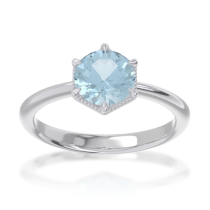
A solitaire setting places a single aquamarine at the centre of the band with no surrounding accent stones. This is the cleanest expression of the stone’s character and works particularly well with aquamarine because the stone’s clarity and colour depth are strong enough to carry a ring without support. A solitaire aquamarine on a slim white gold or platinum band is one of the most elegant and understated wedding ring designs available. The minimal design also ages exceptionally well.
Bezel Setting
A bezel setting encircles the aquamarine in a continuous band of metal, protecting the edges of the stone from all angles. It is the most protective setting available and produces a clean, modern look that suits aquamarine’s cool, architectural quality very well. For a wedding band intended for active daily wear, bezel is the strongest recommendation. The low profile also means the ring sits close to the hand and is less likely to catch on clothing or surfaces.
Halo Setting
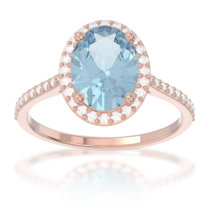
A halo of small diamonds or white sapphires surrounding the central aquamarine adds brilliance and visual impact to the ring. The contrast between the bright white sparkle of the halo stones and the cool blue depth of the aquamarine centre is one of the most successful combinations in contemporary gemstone jewellery. The surrounding stones also provide a degree of physical protection for the aquamarine’s girdle. For women’s engagement rings and wedding rings where visual presence is a priority, halo settings are one of the most popular choices.
East-West and Elongated Settings
Elongated aquamarine cuts, particularly the emerald cut and oval, look striking when oriented east-west across the finger. This modern setting style creates a visual effect that is simultaneously distinctive and elegant, and it suits aquamarine well because the step facets of an emerald-cut stone and the soft curve of an oval both emphasise the stone’s colour depth rather than its brilliance. East-west orientations also sit lower on the hand, which is practical for daily wear.
Three-Stone Settings
A three-stone setting with an aquamarine centre flanked by two smaller diamonds or other accent stones creates a ring with strong symbolic resonance. The traditional meaning of the three stones as representing past, present, and future makes this format particularly appropriate for a wedding ring. For aquamarine, flanking with diamonds creates a cool, bright combination. Flanking with pale blue sapphires or white topaz creates a more tonal, harmonious composition.
Metal Pairings for an Aquamarine Wedding Band
Aquamarine’s cool blue tone interacts differently with each metal, and the right choice significantly affects the character of the finished ring.
White Gold
White gold is the most popular pairing for aquamarine and the combination that most contemporary aquamarine jewellery is designed around. The neutral, cool tone of the metal allows the blue of the stone to dominate without interference. The resulting ring reads as clean, modern, and distinctly understated in the best sense. White gold requires rhodium replating every one to two years to maintain its bright white finish, which is a minor maintenance consideration for a ring worn daily.
Platinum
Platinum delivers the same visual character as white gold but with greater long-term durability and no replating requirement. It is denser and heavier than gold, which gives the ring a more substantial feel on the hand. Platinum develops a soft patina over time rather than losing its bright finish, which many wearers find adds character. For a premium aquamarine in a white metal setting intended for lifelong daily wear without maintenance concerns, platinum is the right choice.
Yellow Gold
Yellow gold with aquamarine creates a warm-cool contrast that is both historically grounded and visually striking. The warmth of the gold makes the cool blue of the aquamarine appear more vivid by contrast, a phenomenon called simultaneous contrast that is well established in colour theory. The combination also has a distinctly vintage quality that suits Art Deco-inspired designs and nature-themed settings particularly well. 18k yellow gold is the premium option. 14k provides excellent colour and durability at a more accessible price.
Rose Gold
Rose gold is a more contemporary choice that has grown considerably in popularity for aquamarine rings over the past decade. The warm pinkish tone of the metal creates an unexpected but harmonious combination with the cool blue of the stone. It works best with paler, lighter aquamarines where the contrast is softer. With very deeply saturated blue aquamarines, the competing warm tones can create a visual tension that reads as less cohesive. For women’s rings with delicate, romantic settings, rose gold and aquamarine is one of the most appealing combinations currently available.
Silver and Other Metals
Sterling silver is an option for aquamarine rings at a more accessible price point and produces a beautiful result. The trade-off is that silver scratches more readily than gold or platinum and requires regular polishing to maintain its appearance. For a wedding band intended for daily wear across decades, 14k gold or platinum is a more appropriate choice than silver, even if the initial investment is higher.
Aquamarine Wedding Bands for Men
Aquamarine is an unconventional but genuinely strong choice for a men’s wedding band. The stone’s cool, clear blue has a quality that reads as composed and assured rather than decorative. In the right setting and the right metal, an aquamarine men’s band makes a quiet but memorable statement.
For men’s rings, width of 6mm to 8mm is standard and proportionally correct for most hand sizes. A bezel setting is strongly recommended for the protection it provides and the clean, architectural look it produces. A flat or low-dome profile keeps the ring comfortable all day and reduces rotation on the finger. Platinum or white gold are the most cohesive metal choices for men’s aquamarine bands. Yellow gold works well for buyers who prefer warmer metal tones and want the visual contrast with the blue stone.
Single stone designs, where one larger aquamarine sits as a focal point within the band, create a ring with clear intent and strong visual presence. Inlay designs, where aquamarine is set as a strip within the band body, offer a more subtle and uniform blue across the full width of the ring, which some men prefer for its more architectural quality.
Aquamarine is the March birthstone, and for men born in March who want a wedding band that reflects that connection, it is an obvious and meaningful choice. It is also the traditional gemstone for the nineteenth anniversary, making it relevant for couples choosing rings at that milestone.
Aquamarine Wedding Bands for Women
For women’s wedding bands, aquamarine offers something genuinely distinctive in the gemstone landscape: a stone with the clarity and delicacy of a diamond, the colour depth of a fine coloured gemstone, and a visual quality that photographs exceptionally well across all types of lighting.
The most successful women’s aquamarine wedding bands tend to work in one of three directions. The first is a solitaire or near-solitaire design where a larger centre aquamarine does most of the work, held in a slim bezel or four-prong setting on a white gold or platinum band. This approach is elegant, versatile, and allows the stone’s colour to speak for itself without competition from accent stones.
The second direction uses diamonds as accent stones, either flanking the aquamarine in a three-stone arrangement or surrounding it in a halo. This creates a ring that combines aquamarine’s calm blue depth with diamond’s brilliant white sparkle in a combination that reads as both contemporary and classic.
The third direction is an eternity or half-eternity band where aquamarines run continuously around the ring, either alone or alternating with diamonds. This style is particularly effective as a wedding band worn alongside a diamond engagement ring, providing a continuous band of colour that complements rather than competes with the solitaire.
Stacking works very naturally for aquamarine. A slim aquamarine band stacks cleanly against a diamond solitaire, providing colour contrast without visual competition. A plain platinum or white gold band on either side of the aquamarine band creates a three-ring stack with the blue stone as its focal point. For brides who enjoy layering rings, aquamarine is one of the most versatile choices available.
How to Care for an Aquamarine Wedding Band
Aquamarine is one of the more straightforward coloured gemstones to care for, which is one of its practical advantages for a ring worn every day over a lifetime.
Daily Habits
Remove the ring before heavy physical activity involving impact or rough surfaces. Remove it before swimming in chlorinated pools or hot tubs. Apply perfume and hand creams before putting the ring on rather than after. These three habits account for the most common sources of damage and chemical exposure. Unlike emerald, aquamarine requires no oil treatment and has no treatment maintenance cycle. The care routine is genuinely simple.
Home Cleaning
Warm water with a small amount of mild dish soap is all you need. Use a soft cloth or soft-bristled brush to clean around the setting and under the stone. Rinse thoroughly and pat dry with a lint-free cloth. This can be done weekly without any concern. Avoid ultrasonic cleaners and steam cleaners, both of which can affect the stone over time, particularly if there are any minor internal features. Avoid harsh chemical cleaners including bleach and acetone.
Storage
Store the ring separately from other jewellery, particularly harder stones like sapphires, rubies, and diamonds that could scratch aquamarine’s surface. A fabric-lined ring box or individual pouch is appropriate. Keep it away from direct prolonged sunlight and heat sources, as extreme heat can affect aquamarine’s colour over the very long term.
Professional Care
An annual professional inspection is worthwhile for any fine jewellery ring. The inspection checks that prongs or bezels are secure and that the stone has not developed any new chips or surface wear that needs attention. Professional cleaning with methods appropriate for aquamarine can also restore the stone’s surface polish if it has dulled. Unlike emerald, aquamarine does not need periodic re-oiling, so professional care is genuinely limited to inspection and standard cleaning.
Aquamarine vs Blue Sapphire: Which Is Right for You?
Aquamarine and blue sapphire are the two most popular choices for a blue gemstone wedding ring, and they are genuinely different stones with different strengths. Understanding the comparison helps you make the right choice for your specific situation.
Blue sapphire rates 9 on the Mohs scale, significantly harder than aquamarine’s 7.5 to 8. For wearers who want maximum durability and plan to wear the ring in demanding conditions, sapphire is the stronger practical choice. Sapphire also has greater toughness, which means it is more resistant to chipping under impact. If bulletproof daily wearability is the priority and you work with your hands or participate in high-impact activities regularly, sapphire is the right call.
Aquamarine wins on clarity and size. Eye-clean aquamarines are the norm, and the stone occurs in much larger crystals than sapphire. A 2-carat eye-clean aquamarine with vivid colour is significantly more affordable than a comparable sapphire. If visual presence and accessible pricing are priorities, aquamarine delivers more stone for the budget.
The two stones also look different in a meaningful way. Sapphire’s colour is deep, vivid, and saturated. It announces itself. Aquamarine’s colour is clear, luminous, and quietly compelling. It rewards attention rather than demanding it. This difference in visual character is not a quality difference. It is a question of which quality suits your personality and your vision for the ring you will wear every day.
Why Choose Azeera for Your Aquamarine Wedding Band
Azeera has been a family business for 75 years. Every aquamarine ring we make is hand-cut and set in our New York City workshop.
Aquamarine selection matters because the variation between individual stones in colour depth and tone is significant, even at the same price point. We source our aquamarines individually, evaluating each stone for the purity and depth of its blue, the evenness of colour distribution across the cut face, and the overall clarity that makes a fine aquamarine so compelling.
We do not use stock photography. Every product image shows the actual stone you are purchasing, which matters when you are selecting a stone whose character varies as much as aquamarine does between specimens.
Our aquamarine wedding bands come with a free lifetime warranty covering manufacturing defects and free resizing for the first year. If you want to discuss a specific stone selection, a custom setting, or the comparison between aquamarine and another blue gemstone for your situation, our team is available for consultation before you place any order.
Browse our collection of men’s aquamarine wedding bands and women’s aquamarine rings, or get in touch to discuss what you have in mind.
Frequently Asked Questions
Is aquamarine durable enough to wear every day in a wedding band?
Yes, with the right setting and care habits. Aquamarine rates 7.5 to 8 on the Mohs hardness scale and, unlike emerald, is typically eye-clean without surface-reaching inclusions, making it more forgiving for daily wear than its hardness rating alone might suggest. It is less durable than sapphire or diamond, so it benefits from a bezel or protective setting if you work with your hands or participate in high-impact activities. With the habit of removing the ring before heavy physical work and keeping it away from harsh chemicals and chlorinated water, an aquamarine wedding band will hold its appearance for decades.
What is the best colour for an aquamarine wedding ring?
The finest aquamarines display a pure medium blue with no green or grey modifier. This colour holds across different lighting conditions, appearing vivid both in natural daylight and indoor lighting. Very pale aquamarines are beautiful but can look washed out in low light. Greenish-blue aquamarines are common and often more affordable, but the green modifier can read differently against metals than a pure blue. Medium tone with vivid saturation and a pure blue hue is the benchmark. When buying, check the stone in multiple lighting conditions rather than only under bright display lighting.
Does aquamarine require oil treatment like emerald?
No. Unlike emerald, which is almost always treated with cedar oil or resin to fill surface fractures and improve clarity, aquamarine is typically not oil-treated. Aquamarine is a Type I gemstone that forms without significant inclusions as a matter of course. Most aquamarines are heat-treated to improve their blue colour by converting greenish iron compounds to pure blue iron, but this treatment is permanent, stable, and requires no maintenance. There is no re-oiling cycle and no restriction on cleaning methods beyond avoiding ultrasonic cleaners and harsh chemicals.
Which metal works best with an aquamarine wedding band?
White gold and platinum are the most popular choices and produce the most cohesive visual result by allowing the cool blue of the stone to dominate without interference from metal tone. Yellow gold creates a warm-cool contrast that makes the blue appear more vivid and has a rich, slightly vintage quality. Rose gold pairs well with paler aquamarines and suits romantic or vintage-inspired settings. The best choice depends on your preferred metal tones and the character you want the ring to project overall.
What is the difference between aquamarine and blue sapphire for a wedding ring?
Blue sapphire is harder and tougher than aquamarine, rating 9 on the Mohs scale compared to aquamarine’s 7.5 to 8, which makes it the stronger practical choice for very demanding wear conditions. Aquamarine typically offers better clarity, larger stone sizes at comparable quality, and more accessible pricing than fine blue sapphire. Visually, the two stones are different in character: sapphire is deep, vivid, and saturated, while aquamarine is clear, luminous, and quietly compelling. Neither is objectively superior. The right choice depends on how important maximum durability is to you and which visual character suits the ring you want to wear every day.
Can aquamarine be used in an eternity band?
Yes, aquamarine works well in eternity and half-eternity band designs. Channel settings, which embed stones within a track in the band protected on both sides by metal, are particularly appropriate for aquamarine in an eternity format because they protect the stones from lateral impact. Bezel-set eternity bands are also a strong option. Note that eternity bands set with stones all around the ring cannot be resized after purchase, so confirming the correct ring size before ordering is essential.
What does aquamarine symbolise in a wedding ring?
Aquamarine has been associated with calm, clarity, honesty, and the protection of love across at least three thousand years of human culture. Ancient seafaring traditions credited it with safe passage through turbulent conditions. Egyptian and Sumerian cultures associated it with happiness and everlasting youth. Medieval European traditions connected it specifically with marriage, believing it helped partners remain understanding and tolerant of each other. In contemporary jewellery, it is most often chosen as a symbol of serenity, emotional clarity, and the kind of steady, honest love that sustains a relationship through difficulty. It is also the March birthstone and the traditional gift for the nineteenth wedding anniversary.
How much does an aquamarine wedding band cost?
Aquamarine is generally more accessible in price than fine sapphire, ruby, or top-quality emerald, which is one of its advantages as a wedding ring choice. A quality natural aquamarine in a simple setting typically starts from around $500 to $1,200 for stones in the 0.5 to 1-carat range. Fine stones with vivid pure blue colour and no greenish modifier command higher prices, as do larger stones. Because aquamarine occurs in larger crystals than most coloured gemstones, you can achieve meaningful visual presence at a given budget more easily than with many alternatives. At Azeera, our aquamarine rings are priced to reflect the actual quality of the specific stone selected.
Is aquamarine the right choice if I want a blue wedding ring but am not sure between aquamarine and sapphire?
The practical answer depends on your priorities. If you want maximum durability and plan to wear the ring in physically demanding conditions, sapphire is the stronger choice at 9 on the Mohs scale. If you want a larger, eye-clean stone at a more accessible price and are drawn to a lighter, clearer blue rather than a deep vivid blue, aquamarine is likely the right choice. The visual difference is meaningful: sapphire is bold and declarative, aquamarine is luminous and quietly refined. Both are exceptional gemstones for a wedding ring. Speaking with someone who can show you examples of both in person will resolve the question faster than any comparison in words.