TLDR
- Durability: Aquamarine rates 7.5 to 8 on the Mohs hardness scale and has excellent toughness. Unlike emerald, which shares this hardness rating, aquamarine is typically eye-clean and free of surface-reaching inclusions. This makes it tougher than emerald in practice and a more straightforward choice for daily wear, though it requires more care than sapphire or ruby.
- Color: The most important quality factor. The ideal is a vivid, pure blue to slightly greenish-blue at medium tone with strong saturation. The Santa Maria color benchmark describes the most vivid, intensely saturated aquamarines. Color should hold in natural daylight and be evaluated in multiple lighting conditions before purchase.
- Something Blue: Aquamarine is the most visually impactful way to fulfill the something blue wedding tradition with the engagement ring itself. A blue sapphire fulfills the same tradition but costs significantly more. Aquamarine delivers the something blue with considerable presence at a more accessible price.
- Treatment: Heat treatment is standard for aquamarine; it is permanent, stable, and requires no ongoing maintenance. Unlike emerald oil treatment, aquamarine heat treatment does not need to be refreshed and is safe for ultrasonic cleaning.
- Royal Connection: Princess Diana’s aquamarine ring, a large rectangular step-cut stone set in yellow gold, was later worn publicly by Meghan Markle following Diana’s death. It is one of the most recognized and photographed pieces of gemstone jewelry in recent history.
- Meaning: Aquamarine is associated with calm, clarity, courage, and the beginning of new journeys. It is the March birthstone and the traditional gift for the 19th wedding anniversary. Its connection to the sea and to safe passage makes it a deeply meaningful choice for a ring that marks the beginning of a shared life.
- Azeera: Every aquamarine is individually evaluated for color, clarity, and cut before entering our NYC workshop. Natural only. Full disclosure on every stone.
When Meghan Markle wore Princess Diana’s aquamarine ring at her wedding reception in 2018, she introduced one of the world’s most famous gemstones to a new generation of buyers. The ring, a large rectangular step-cut aquamarine set in yellow gold, had been one of Diana’s most worn and most beloved pieces. It is striking, substantial, and instantly recognizable as something other than a conventional engagement ring stone.
But aquamarine’s appeal for engagement rings extends well beyond any royal connection. The stone produces a blue that is uniquely its own: lighter and more transparent than sapphire, with a clarity and luminosity that photographs with remarkable beauty. It is the most accessible way to fulfill the ‘something blue’ wedding tradition with the ring itself, rather than a hidden detail. And its symbolism, rooted in the sea, in safe passage, and in the courage to begin new journeys, makes it a particularly apt choice for a ring that marks the start of a shared life.
There is also a practical story that most buyers researching aquamarine do not expect to find: aquamarine is significantly tougher than emerald despite sharing the same hardness rating. This distinction matters considerably for a ring worn every day. The online conversation around aquamarine engagement rings includes some anxiety about durability, much of it based on comparisons to emeralds, which do not fully account for this difference in toughness. This guide addresses that honestly.
If you are still comparing aquamarine to other gemstone options, our complete guide to gemstone engagement rings covers every stone side-by-side. If you are ready to focus on aquamarine, read on.
Why Choose an Aquamarine Engagement Ring?
A Blue That Is Uniquely Its Own
Aquamarine produces a blue that no other widely available gemstone replicates. It is not the deep, saturated blue of fine sapphire. It is a lighter, more transparent, more luminous blue, often described as the color of clear tropical water in sunlight. The stone has a quality of openness and clarity that is entirely different from the depth and intensity of sapphire or the richness of emerald. For buyers who want a blue engagement ring but find the intensity of sapphire overwhelming, or who simply respond to aquamarine’s distinctive color character, there is no substitute.
The Something Blue Tradition
The tradition of something blue in wedding culture asks a bride to wear something blue on her wedding day. Most brides fulfill this tradition with a small hidden detail, a ribbon stitched inside a dress, a blue garter, a painted toenail. An aquamarine engagement ring fulfills this tradition with the most visible and permanent piece of jewelry she will wear on that day and on every day that follows. A blue sapphire fulfills the same tradition, but a sapphire of comparable size and quality costs significantly more than an aquamarine. For buyers who want the something blue to be the ring itself and who value the personal significance of that choice, aquamarine is the most direct and most meaningful way to achieve it.
The Diana and Meghan Connection
Princess Diana’s aquamarine ring became internationally famous not once but twice. Diana wore it regularly during her public life, and it was considered one of her signature pieces. When Meghan Markle wore it at her wedding reception in May 2018, it was photographed millions of times and introduced an entirely new audience to aquamarine as an engagement ring stone. The ring is a large rectangular step-cut aquamarine in a yellow gold setting, restrained in design and powerful in presence. It is one of the clearest demonstrations in recent history of what a fine aquamarine can look like on the hand and in photographs.
Better Toughness Than Emerald at the Same Hardness
This is the practical fact that most buyers researching aquamarine engagement rings do not expect to find. Aquamarine and emerald share the same hardness rating of 7.5 to 8 on the Mohs scale. But toughness, the resistance to chipping and breaking from impact, is a different property from hardness, and aquamarine’s toughness is significantly better than emerald’s for one specific reason: aquamarine is typically a Type I gemstone, eye-clean and free of the surface-reaching inclusions that give natural emeralds lower toughness despite their comparable hardness. This makes aquamarine a more straightforward daily wear stone than emerald, with fewer restrictions and less anxiety about impact.
Exceptional Value for Its Visual Impact
Aquamarine forms in large natural crystals, which means the price per carat remains relatively affordable even at high-quality levels. A fine Santa Maria blue aquamarine of one to two carats costs significantly less than a comparable blue sapphire or emerald. For buyers who want a striking, visually distinctive colored gemstone engagement ring without the price premium of the traditional Big Three gemstones, aquamarine offers exceptional value. The budget can go toward a larger stone, a finer setting, or better metalwork than the same amount would allow with ruby, emerald, or sapphire.
Is Aquamarine Durable Enough for an Engagement Ring?
Yes, with appropriate settings and care habits. This is the question that generates the most anxiety among buyers researching aquamarine engagement rings, and it deserves a direct, honest, and nuanced answer.
Hardness: 7.5 to 8 on the Mohs Scale
Aquamarine resists scratching from most everyday surfaces. Metal, wood, fabric, and most materials encountered in daily life all sit below aquamarine on the hardness scale and will not mark its surface. At 7.5 to 8, aquamarine is vulnerable to scratching from quartz, which rates 7 on the Mohs scale and is present as a component of common dust and sand. Long-term exposure to quartz dust can cause micro-abrasion on the surface over years of wear, but this is a slow and gradual process and not a daily concern for most wearers.
Toughness: Where Aquamarine Outperforms Emerald
Toughness is resistance to chipping and breaking under impact, a separate property from hardness. This is where the aquamarine vs emerald comparison becomes important. Natural emeralds have lower toughness than their hardness suggests because almost all natural emeralds contain jardin inclusions that extend to the stone’s surface, creating structural vulnerability points. Aquamarine, by contrast, is a Type I gemstone that is typically eye-clean and free of surface-reaching inclusions. Without these vulnerability points, aquamarine’s toughness is significantly better than emerald’s in practice. A direct impact that might propagate a fracture in a natural emerald is much less likely to cause damage to an aquamarine of comparable size.
This distinction matters considerably for an engagement ring worn daily over decades. Aquamarine is not as tough as sapphire or ruby, which both rate 9 on the Mohs scale with excellent toughness. But within the 7.5 to 8 hardness group, aquamarine is the stronger choice for daily wear.
What This Means in Practice
A well-set aquamarine engagement ring, worn with reasonable care habits, is appropriate for daily wear. The ring should be removed before heavy physical work, sport, gardening, and situations where the stone is likely to receive a direct hard knock. These are the same precautions recommended for any colored gemstone engagement ring, except for sapphire and ruby. With a protective setting, such as a bezel, halo, or low-profile prong setting, the practical daily wear experience of an aquamarine engagement ring is very good.
The buyers who find aquamarine rings problematic are typically those who wear them without any restrictions or protective setting. The buyers who are happy with them are those who understand the stone’s character and wear it accordingly. This guide will help you be in the second group.
Understanding Aquamarine Color
Color is the most important quality factor for aquamarine, as it is for all colored gemstones. But aquamarine’s color evaluation has specific characteristics that differ from the deep, saturated stones in this guide.
Hue
The ideal aquamarine hue for an engagement ring runs from pure blue to slightly greenish-blue. Pure blue stones are the most classically desirable and command the highest prices. Slightly greenish-blue stones are also beautiful and are more common at natural, untreated color levels before heat treatment. Very greenish aquamarines, sometimes called sea-foam or mint aquamarines, offer a different aesthetic that some buyers find appealing, but they are considered less classic and generally more affordable.
Tone
Tone refers to how light or dark the blue reads. Aquamarine is inherently a lighter-toned stone compared to sapphire or tanzanite, and this is a characteristic of the stone rather than a defect. The ideal tone for an engagement ring aquamarine is medium to medium-light. Too light and the stone appears nearly colorless, losing the distinctive blue entirely. Too dark and the stone loses the luminous, transparent quality that makes aquamarine so visually distinctive. Unlike sapphire, where a medium-dark tone is often preferred, aquamarine’s beauty is partly in its transparency and the way light moves through the stone.
Saturation
Saturation is the richness or intensity of the blue. Vivid, well-saturated aquamarines are the most valuable and the most visually striking. Stones with weak saturation look pale or nearly colorless in indoor lighting. When budgeting for an aquamarine engagement ring, prioritizing saturation over carat weight is the right approach. A smaller stone with vivid color will outperform a larger, paler stone in every visual sense.
The Santa Maria Color Benchmark
Santa Maria is the most prestigious color benchmark in the aquamarine market, named after the Santa Maria de Itabira mine in Brazil. Santa Maria aquamarines display an intensely saturated, pure blue color with exceptional depth, notably more vivid than most commercial aquamarines. The benchmark has been extended to include stones of comparable color quality from other origins, collectively described as Santa Maria Africana when from Mozambican deposits. A stone described as Santa Maria quality will be the most vivid and the most expensive in any comparison of aquamarines.
Color Stability in Different Lighting
Aquamarine performs best under natural daylight and in good indoor lighting. Under very warm incandescent light, the blue can appear slightly muted compared to daylight. This is not a concern for most wearers but is worth understanding. When evaluating an aquamarine for an engagement ring, look at the stone in both natural daylight and under the indoor lighting conditions where the ring will most often be worn. A well-saturated stone will hold its color in both environments. A pale stone may appear nearly colorless indoors.
Aquamarine vs Emerald: The Durability Comparison Buyers Always Ask About
Because aquamarine and emerald share the same hardness rating of 7.5 to 8, they are often compared directly when buyers research colored gemstone engagement rings. The comparison almost always comes with the question: if they have the same hardness, is aquamarine more or less suitable for daily wear than emerald?
The answer is that aquamarine is more suitable for daily wear than natural emerald for most buyers, and the reason is toughness rather than hardness.
Natural emerald has poor to fair toughness because of jardin, the surface-reaching inclusions present in almost all natural emeralds. These inclusion networks create structural vulnerability points that can propagate under impact, making emerald more vulnerable to chipping than its hardness alone would suggest. A well-set natural emerald requires protective settings and more careful wear habits, specifically because of this toughness limitation.
Aquamarine, as a Type I gemstone, is typically free of these surface-reaching inclusions. Without the jardin-related vulnerability, aquamarine’s toughness in practice is significantly better than that of natural emerald. The two stones share a hardness rating but differ in toughness; for daily wear, toughness often matters more than hardness.
Lab-grown emerald is the one exception to this comparison. Lab-grown emerald is produced without the jardin of natural emerald and therefore has substantially better toughness than its natural counterpart. For buyers specifically comparing aquamarine to lab-grown emerald, the toughness gap is narrower. Both are reasonable choices for daily wear, provided they are cared for appropriately.
Aquamarine vs Blue Sapphire: Choosing Between the Two Blue Stones
The other comparison that comes up regularly for aquamarine buyers is with blue sapphire. Both produce blue engagement rings. Both have significant royal and historical associations. They are the two most popular blue engagement ring stones, and they attract the same buyer: someone who wants a blue ring that is clearly not a diamond.
The differences are significant and worth understanding clearly before deciding.
Color
Blue sapphire and aquamarine produce fundamentally different blues. Sapphire’s blue is deep, saturated, and intense. Fine sapphire in cornflower or royal blue is among the most vivid colors in the gemstone world. Aquamarine’s blue is lighter, more transparent, and more luminous. It is the color of clear water in sunlight, where sapphire is the color of the deep sea. Both are beautiful. The right choice depends on which color character resonates most personally. Neither is objectively superior.
Durability
Blue sapphire rates 9 on the Mohs hardness scale with excellent toughness and no cleavage planes. It is the most durable colored gemstone available for an engagement ring. Aquamarine at 7.5 to 8 with good toughness is a very capable daily wear stone, but requires more care than sapphire. If unrestricted daily wear with minimal care habits is the priority, sapphire is the stronger choice. If the aquamarine color character is what the buyer wants and they are prepared to wear it with reasonable care, aquamarine is entirely appropriate.
Price
Fine blue sapphire is significantly more expensive than comparable aquamarine. A one-carat blue sapphire of excellent cornflower color costs considerably more than a one-carat aquamarine of comparable clarity and saturation. For buyers who want a blue engagement ring at an accessible price, aquamarine offers significantly better value per visual impact than sapphire.
Symbolism
Blue sapphire is associated with loyalty, faithfulness, and truth. Aquamarine is associated with calm, clarity, courage, and new beginnings. Both are deeply meaningful for an engagement ring. The right symbolic association depends on what meaning the couple wants the ring to carry.
Origin and Treatment: What You Need to Know
Major Origins
Brazil is the dominant source of fine aquamarine and produces the full range from commercial to exceptional quality, including Santa Maria blue stones from the famous Itabira mines. Brazilian aquamarine is the reference against which all other origins are compared. Mozambique produces fine Santa Maria-equivalent stones, sometimes called Santa Maria Africana, that achieve the same vivid color benchmark. Madagascar, Pakistan, and Nigeria produce aquamarines of varying quality and color character. Origin is less significant for aquamarine than it is for ruby or sapphire, because the color differences between origins are more subtle and the premium for specific origins is more modest.
Heat Treatment
The vast majority of aquamarines on the market have been heat-treated. This is standard practice and entirely accepted. Heat treatment in aquamarine removes the stone’s greenish component, making it appear more purely blue. The treatment is stable and permanent. It does not fade, degrade, or require any maintenance whatsoever. Unlike emerald oil treatment, aquamarine heat treatment is set once and never needs to be refreshed. Aquamarine is also safe for ultrasonic cleaning, whereas emerald is not. For daily care purposes, aquamarine is one of the simplest colored gemstones to maintain.
Untreated aquamarines, those with a naturally pure blue color without heat enhancement, exist but are rarely distinguished in the commercial market the way unheated sapphires and rubies are. For most buyers, the heat-treatment question is not a significant factor in selecting aquamarines.
What Does an Aquamarine Engagement Ring Mean?
Aquamarine’s symbolism is one of the most cohesive and fitting of any engagement ring gemstone. Its associations have accumulated across ancient Roman, sailor, and maritime cultures and center on a specific set of themes that are deeply relevant to the act of getting engaged.
The stone’s name comes from the Latin aqua marina, meaning water of the sea. In ancient Rome, aquamarine was sacred to Neptune, the god of the sea, and was carried by sailors as a protective talisman believed to ensure safe passage across water. The stone was associated with the courage to begin a journey into the unknown, with the clarity to navigate uncertainty, and with the calm confidence needed to cross into unfamiliar territory. These are not merely historical associations. They are among the most directly applicable meanings any stone carries to the act of engagement, which is precisely the commitment to begin a journey into a shared future that cannot be fully known in advance.
In medieval Europe, aquamarine was associated with fidelity, honesty, and the courage to face difficulty together. It was believed to strengthen marriages and to keep love clear and calm through the turbulence that long relationships inevitably encounter. The stone was given between married couples as a symbol of sustained clarity and mutual honesty.
Aquamarine is the March birthstone, one of the most widely recognized birthstone associations in the traditional calendar. For buyers with a March birthday or a March anniversary, the personal connection to the stone adds another layer of meaning. It is also the traditional gift for the 19th wedding anniversary, symbolizing the wisdom and clarity that come from nearly two decades of shared life.
For an engagement ring, aquamarine’s symbolism is both romantic and practical. It does not promise a love that burns with constant intensity. It promises a love that is clear, calm, honest, and capable of navigating whatever comes with steadiness and mutual trust. For many couples, this is exactly the meaning they want to carry forward.
Setting Styles for an Aquamarine Engagement Ring
Setting choice matters for aquamarine in two ways: it affects the stone’s visual presentation and determines how well it protects the stone from the impacts of daily wear. Given that aquamarine requires more care than sapphire or ruby, setting style is an important part of the buying decision.
Solitaire
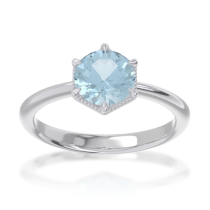
A solitaire setting presents the aquamarine as a single focal point. The stone’s transparency and luminosity are best shown in a setting that allows maximum light to enter from all angles. An oval, cushion, or step-cut aquamarine in a four-prong solitaire setting in yellow gold is one of the most elegant and historically referenced settings for this stone, directly referencing the Diana ring. For buyers who want clean simplicity and full visibility of the stone’s color, the solitaire is the strongest choice. For aquamarines with minimal surface-reaching inclusions and good toughness, a prong solitaire is appropriate for standard daily wear.
Bezel
A bezel setting encircles the entire perimeter of the aquamarine in a continuous band of metal, offering the most protection of any setting style. For buyers who lead active lives or who want to minimize care requirements, a bezel-set aquamarine is the most practical choice. The visual effect is clean and architectural, and the stone’s color is framed by the metal rather than left exposed to the open air. A bezel-set aquamarine in yellow gold or platinum, with an oval or rectangular step-cut, is an elegant, low-maintenance option that references the Diana ring’s aesthetic while offering greater protection.
Halo
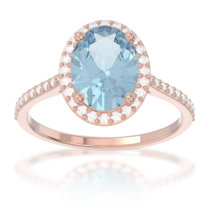
A halo setting surrounds the central aquamarine with a ring of smaller diamonds. The contrast between the pale blue of the aquamarine and the white sparkle of the surrounding diamonds is striking, creating an impression of greater size and presence. Halo settings also provide some additional protection for the edges of the central stone. For buyers who want maximum visual impact from their aquamarine, the halo is an excellent choice.
Three-Stone
A three-stone setting places the aquamarine at the center, flanked by two side stones. A central aquamarine with two diamond side stones creates a clean, balanced composition with strong visual contrast between the blue center and the white flanking stones. The design works particularly well for step-cut aquamarines, whose long, parallel facets create an elegant horizontal line that the flanking stones complement.
East-West and Step Cut
An aquamarine in a step cut, such as an emerald cut or Asscher cut, oriented horizontally across the finger rather than vertically, creates one of the most distinctive and striking options in colored gemstone engagement ring design. The step cut emphasizes aquamarine’s exceptional clarity and the way light moves through the stone in long, parallel flashes. An east-west step-cut aquamarine in yellow gold directly references the Diana ring’s aesthetic. It is a choice that carries both personal significance and immediate recognition.
Vintage and Art Deco
Aquamarine was one of the signature stones of Art Deco jewelry, particularly in the geometric, stepped settings of the 1920s and 1930s, where the stone’s natural rectangular step-cut form complemented the angular aesthetic of the period. Buyers drawn to period aesthetics will find aquamarine one of the most historically appropriate and visually cohesive choices for a vintage-inspired engagement ring.
Choosing the Right Metal for an Aquamarine Engagement Ring
Metal choice significantly affects how aquamarine’s distinctive blue reads on the hand. The stone’s lighter, more transparent blue responds very differently to warm and cool metals.
Yellow Gold
Yellow gold is the most historically referenced and most visually distinctive pairing for aquamarine. The contrast between the warm tone of yellow gold and the cool blue of the stone is immediately striking, creating a composition with a clear visual identity. The Diana ring is set in yellow gold, and this combination is recognizable because of it. Yellow gold enhances the warmth of aquamarines with any greenish-blue hue, which can be either a positive or a negative, depending on the specific stone’s hue. For a pure, strong blue aquamarine, yellow gold creates a bold, confident contrast. Azeera offers 14k and 18k yellow gold.
Platinum and White Gold
Platinum and white gold are neutral in tone, which allows the blue of the aquamarine to hold all the visual attention without a warm metal contrast competing with it. This creates a cooler, more contemporary look that emphasizes the stone’s blue rather than creating contrast. For buyers who prefer understated elegance and want the aquamarine’s color as the sole visual statement, platinum or white gold is a clean, refined choice. Platinum is the more durable and lower-maintenance of the two. White gold requires rhodium plating every one to two years. Azeera offers 14k and 18k white gold and platinum.
Rose Gold
Rose gold with aquamarine creates an unexpected but very appealing combination. The warm pinkish tone of rose gold against the cool blue of the stone creates a romantic tension that many buyers find immediately appealing. It works particularly well with slightly greenish-blue or lighter aquamarines, where the warm metal warms the stone’s cooler color character and creates a harmonious overall palette. For a pure, saturated blue aquamarine, rose gold can feel slightly less resolved than yellow gold. Azeera offers 14k and 18k rose gold.
Caring for an Aquamarine Engagement Ring
Aquamarine is one of the easier colored gemstones to care for among the stones in this guide. Its heat treatment is stable and permanent; it does not require oil treatment maintenance, and it can be cleaned with standard methods, including ultrasonic cleaners in good condition.
Daily Habits
Remove the ring before heavy physical work, sport, gardening, and situations where a hard knock against a stone surface or metal edge is likely. These precautions are standard for any colored gemstone engagement ring other than sapphire or ruby and should become a habit rather than a source of anxiety. Apply perfumes, hand lotions, and hairspray before putting the ring on rather than after. Remove the ring before swimming in chlorinated pools and before using harsh household cleaning products.
Cleaning at Home
Soak the ring in warm water with a few drops of mild dish soap for 10 to 15 minutes. Use a soft toothbrush to gently clean around the setting and under the stone, where oils and debris accumulate. Rinse thoroughly and pat dry with a lint-free cloth. This routine is safe and effective for weekly use. Unlike emerald, aquamarine can typically be cleaned in an ultrasonic cleaner, provided it is in good condition and has no fractures. If you are unsure about the condition of your stone, warm water and soap is always the safest option.
Professional Care
Have the ring professionally inspected and cleaned once a year. The annual inspection checks that prongs or bezel edges have not worn to a point where the stone is at risk of becoming loose. For a ring worn daily, this is a straightforward precaution that is far less costly than replacing a lost or damaged stone. Azeera offers a lifetime warranty on manufacturing defects and free resizing for the first year after purchase.
Why Choose Azeera for Your Aquamarine Engagement Ring?
Azeera has been a family business for 75 years. Every ring is cut and set by hand in our New York City workshop by craftspeople who specialize in colored gemstones. Every aquamarine that enters our workshop has been individually evaluated for color saturation, clarity, and cut quality before selection.
Aquamarine’s visual impact is almost entirely determined by color quality, and color quality in aquamarine varies enormously between stones at similar price points. We source from the top 1% of available stones, which means we reject pale, weakly saturated aquamarines regardless of their size. The stones that reach our workshop are selected for their vivid, clear blue, which makes aquamarine a compelling engagement ring choice.
We do not use stock photography. Every product image on our site shows the actual stone you are purchasing. For aquamarine, where the difference between a vividly saturated stone and a pale one is enormous at eye level, this matters considerably. The color you see in the photograph is the color of the specific stone that will arrive on your finger.
Our aquamarine engagement rings are available in all seven metals we carry: 14k and 18k yellow gold, 14k and 18k white gold, platinum, and 14k and 18k rose gold. We also offer fully custom commission engagement rings for buyers with specific design, cut, or origin preferences.
Browse our aquamarine engagement ring collection to begin. If you are also choosing a wedding band, our aquamarine wedding band guide addresses the specific considerations for that piece. And if you are still comparing aquamarine to other options, our complete guide to gemstone engagement rings covers every stone we offer.
Frequently Asked Questions
Is an aquamarine durable enough for daily wear as an engagement ring?
Yes, with appropriate settings and reasonable care habits. Aquamarine rates 7.5 to 8 on the Mohs hardness scale and is typically a Type I gemstone that is eye-clean and free of surface-reaching inclusions. This gives it significantly better practical toughness than natural emerald despite sharing the same hardness rating. A well-set aquamarine in a bezel, halo, or protective prong setting, worn with the habit of removing it during heavy physical activity, is appropriate for daily wear. It is not as tough as sapphire or ruby and requires more conscious care than those stones, but it is well within the range of gemstones that work as engagement rings for daily wear.
What does an aquamarine engagement ring mean?
Aquamarine is associated with calm, clarity, courage, and safe passage through new journeys. Its name comes from the Latin for water of the sea, and it was carried by ancient Roman sailors as a protective talisman for voyages. In medieval Europe, it was associated with fidelity, honesty, and the clarity to navigate the difficulties that long relationships encounter. An engagement ring symbolizes a commitment to clear communication, mutual honesty, and the courage to begin a shared journey into an unknown future. It is the March birthstone and the traditional gift for the 19th wedding anniversary.
What is the Meghan Markle aquamarine ring?
Meghan Markle wore Princess Diana’s aquamarine ring at her wedding reception in May 2018. The ring features a large rectangular step-cut aquamarine set in yellow gold and was one of Diana’s most-worn and recognizable jewelry pieces. Meghan wore it as a tribute to Diana and, in doing so, made it internationally famous to a new generation of jewelry buyers. The ring’s design, a substantial step-cut aquamarine in yellow gold with a restrained setting, has influenced aquamarine engagement ring aesthetics since its appearance. It demonstrates clearly what a fine aquamarine looks like on the hand in natural light.
How does aquamarine compare to blue sapphire for an engagement ring?
The two stones produce fundamentally different blues. Sapphire is deep, saturated, and intense. Aquamarine is lighter, more transparent, and more luminous. Sapphire rates 9 on the Mohs hardness scale, with excellent toughness, and is more durable than aquamarine for unrestricted daily wear. Aquamarine at 7.5 to 8 requires more care. Sapphire is significantly more expensive than aquamarine at comparable quality levels. The right choice depends on which color character you respond to, your wardrobe habits, and your budget. Both are excellent engagement ring choices, and both fulfill the something blue tradition.
What is the something blue tradition, and how does aquamarine fulfill it?
The something blue wedding tradition asks a bride to wear something blue on her wedding day, typically seen as a symbol of fidelity, purity, and love. Most brides fulfill this tradition with a small hidden detail, such as a blue ribbon inside a dress or a blue garter. An aquamarine engagement ring fulfills this tradition with the most visible and permanent piece of jewelry she will wear on her wedding day and on every day that follows. It is the most impactful and most personal way to make the something blue part of the ring itself rather than a peripheral detail.
Is heat treatment significant for aquamarine?
Heat treatment is standard for aquamarine and is almost universally applied. It removes the greenish component of the stone’s color, making it appear more purely blue. The treatment is stable and permanent, requires no maintenance, and does not affect the stone’s durability or its care. Unlike emerald oil treatment, which leaches out over time and must be refreshed, aquamarine heat treatment is applied once and never changes. Aquamarine is also safe for ultrasonic cleaning, whereas emerald is not. The heat-treatment question is much less consequential for aquamarine than for sapphire, ruby, or emerald.
Which metal is best for an aquamarine engagement ring?
Yellow gold is the most historically referenced and most visually distinctive pairing, creating a bold contrast between the warm metal and the cool blue stone. The Diana ring, the most famous aquamarine jewelry piece in modern history, is set in yellow gold. Platinum and white gold create a cooler, more contemporary look that lets the aquamarine’s color take all the visual attention. Rose gold creates a romantic, unexpected contrast that works particularly well with slightly greenish-blue or lighter aquamarines. The right choice depends on which metals you prefer to wear and the level of contrast you want between the metal and the stone.
How much does an aquamarine engagement ring cost?
Aquamarine is one of the most accessible colored gemstones in the fine jewelry market. Because it forms in large natural crystals, the price per carat remains relatively low even at high quality levels. A fine aquamarine engagement ring from Azeera with a well-saturated blue stone in an excellent setting typically starts at a significantly lower price than a comparable sapphire or emerald ring of the same size and setting quality. For buyers seeking a vivid, beautiful, colored gemstone engagement ring at an accessible price, aquamarine offers exceptional value given its visual impact. We are happy to discuss options across all budget levels.
Can an aquamarine engagement ring be resized?
Yes. Aquamarine is stable under the heat involved in standard ring resizing and can be resized by an experienced jeweler without any risk to the stone. Solitaire and halo settings can typically be resized one to two sizes in either direction. Eternity-style settings with stones set all the way around require removing and replacing stones to resize. Azeera offers free resizing for the first year after purchase on all rings we make.