TLDR
- Durability: Amethyst rates 7 on the Mohs hardness scale, the softest stone in Azeera’s engagement ring catalog. This is not a disqualification, but it is a setting and care consideration. A protective setting, specifically a bezel, channel, or halo rather than a high prong solitaire, and attentive daily habits make an amethyst engagement ring a genuinely appropriate choice. The buyers who regretted amethyst rings chose poor settings and wore them without restriction. The buyers who love them understood the stone’s character and dressed it accordingly.
- Color: Amethyst’s range runs from pale lavender to deep violet-purple. The right shade is a matter of personal preference rather than a strict hierarchy of qualities. Deep Siberian purple is the most prestigious color benchmark. Rose de France is a light, rosy lavender at the softer end of the spectrum. Both are beautiful. The best stone is the one whose color resonates most personally.
- Purple: Amethyst is the most accessible option for a purple engagement ring. Purple, as a gemstone color, is genuinely rare compared to most other stones. For buyers who want purple above all else, amethyst is the primary option at accessible prices.
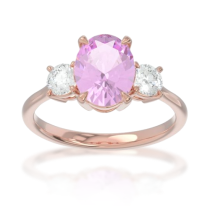
- Metals: Rose gold is the strongest pairing for most amethysts. The warm pinkish tone of rose gold and the cool purple of the stone create one of the most harmonious combinations in colored gemstone jewelry. Yellow gold works particularly well for deeper, more saturated purple stones. White gold and platinum create a cooler, more contemporary look.
- Meaning: Amethyst has been associated with calm, sincerity, spiritual clarity, and protection for thousands of years across Greek, medieval European, and Catholic traditions. It is the February birthstone. An engagement ring carries the symbolism of a love that is grounded, clear-headed, and deeply intentional rather than simply passionate.
- Value: Amethyst is one of the most affordable gemstones in the fine jewelry market. The budget saved on the stone can go toward an exceptional setting, superior metalwork, or a larger stone of excellent color. For buyers who prioritize design quality and craft over stone rarity, amethyst offers outstanding value.
- Azeera: Every amethyst is individually evaluated for color depth, evenness, and clarity before entering our NYC workshop. Natural only. Full disclosure on every stone.
Purple is one of the rarest colors in the gemstone world. Truly vivid purple gemstones, the kind that hold their color across daylight and indoor light without fading toward blue or red, are genuinely uncommon at accessible prices. Amethyst is the exception. It produces a purple that ranges from pale, barely-there lavender to deep, saturated violet-purple, and it does so at a price point that allows the budget to go toward design, craft, and metalwork rather than stone rarity.
A purple engagement ring is a genuinely distinctive choice. Among the many couples who wear colored gemstone engagement rings, amethyst wearers occupy an almost unique visual space. No other affordable gemstone produces this color. For buyers who have decided they want purple above all else, amethyst is not a compromise. It is the answer.
But a durability question consistently comes up in buyer research, and it deserves a direct, honest answer rather than the vague reassurance some jewelry guides offer. Amethyst rates 7 on the Mohs hardness scale, the softest stone in Azeera’s engagement ring catalog. This is real, and it matters. It means the choice is not optional. It means daily care habits matter more than they do for sapphire or ruby. And it means that buyers who go in fully informed tend to love their amethyst engagement rings, while buyers who were not adequately prepared sometimes find the maintenance requirements more than they expected.
This guide covers everything honestly. If you are still comparing amethyst to other gemstone options, our complete guide to gemstone engagement rings covers every stone side by side. If you are ready to focus on amethyst, read on.
Why Choose an Amethyst Engagement Ring?
The Rarest Color at an Accessible Price
Purple as a gemstone color is genuinely rare at quality levels appropriate for fine jewelry. Tanzanite produces a vivid violet-blue but is expensive and requires significant care. Fine alexandrite achieves purple-red but commands very high prices. Spinel can produce purple, but it is less commonly available in engagement ring sizes. Amethyst is the one gemstone that reliably produces true purple, across a full range of tones from pale lavender to deep violet, at prices that allow the design to be the priority rather than the stone budget alone.
A Purple Engagement Ring That Is Entirely Distinctive
Among all the colored gemstone engagement ring choices, purple amethyst is perhaps the most immediately distinctive. Blue sapphire and aquamarine engagement rings, while beautiful, are not uncommon. Emerald and ruby have significant market presence. A vivid purple amethyst engagement ring is something that most people have never seen on a finger in real life. For buyers who want a ring that is clearly and unmistakably their own, amethyst delivers a color that turns heads in a way that no other accessible stone does.
A Long History of Royal and Spiritual Significance
Purple has been the color of royalty and of spiritual authority for so long in human history that its associations are almost inseparable from the color itself. Roman emperors wore purple as a mark of supreme authority, and the color was so expensive to produce from Tyrian dye that it was legally restricted to the imperial court. Catholic bishops wore amethysts as symbols of spiritual wisdom and protection. In medieval Europe, amethyst was considered a stone of special piety and was embedded in the rings and regalia of high ecclesiastical office. For buyers who want a ring that carries this specific kind of historical weight, amethyst is the most direct and most accessible way to access it.
Exceptional Value That Redirects Budget Toward Design
Amethyst is one of the most affordable fine gemstones in the jewelry market. This is not because the stone is unattractive or undesirable. It is because amethyst forms in large natural crystals in relatively abundant deposits, which means the market has sufficient supply to keep prices accessible. For buyers who want a beautifully designed, well-crafted fine jewelry piece and are happy to allocate most of their budget toward the setting, metalwork, and overall design rather than the stone itself, amethyst offers an opportunity that sapphire, ruby, and emerald do not.
The February Birthstone
Amethyst is the February birthstone, one of the most widely recognized. For couples with a February birthday or anniversary, the personal connection to the stone adds another layer of meaning that no other choice can provide. The February birthstone connection also gives amethyst immediate recognizability, making it a natural conversation piece as an engagement ring choice.
Amethyst Durability: The Honest Assessment
This is the question that generates the most anxiety in buyer research for amethyst engagement rings, and the Reddit threads and forum discussions on the topic reflect genuine and legitimate concern. Amethyst has a hardness of 7 on the Mohs hardness scale. This is the softest rating among Azeera’s engagement ring gemstones. The honest assessment is that this matters, that it shapes the setting choices available to you, and that it requires more deliberate daily habits than harder stones demand. The equally honest assessment is that it does not disqualify amethyst as an engagement ring choice when the buyer understands what they are working with.
What Mohs 7 Means in Practice
At Mohs 7, amethyst is vulnerable to scratching from quartz, which sits at 7 on the Mohs scale and is present as a component in common dust, sand, and many hard surfaces. Long-term daily wear without protection will cause surface microabrasion, gradually dulling the stone’s polish. This is not a catastrophic risk that happens overnight, but it is a real effect over months and years of unrestricted wear on a ring that regularly contacts hard surfaces.
To put this in context: sapphire and ruby at Mohs 9 are not vulnerable to quartz abrasion. Aquamarine and emerald at Mohs 7.5 to 8 have a meaningful buffer above the hardness of quartz. Amethyst at exactly Mohs 7 sits at the threshold where quartz contact becomes a real consideration. A garnet with a Mohs hardness of 6.5 to 7.5 has a hardness comparable to, or sometimes better than, that of other minerals. Amethyst is not uniquely fragile. But it is at the lower end of the appropriate range for a daily-wear engagement ring.
Toughness: Where Amethyst Is More Reassuring
Toughness is the resistance to chipping and breaking under impact, separate from hardness. Amethyst has good toughness. It does not have surface-reaching inclusions that reduce emerald’s toughness, nor does it have cleavage planes that make some stones particularly vulnerable to directional impacts. A knock that would worry an emerald or garnet wearer is less concerning with an amethyst in a protective setting. The primary durability issue with amethyst is hardness-related surface abrasion, not toughness-related chipping.
The Setting Solution
The most effective mitigation for amethyst’s hardness limitations is the choice of setting. A bezel setting encircles the entire perimeter of the stone in metal, protecting the girdle from the lateral impacts and edge contact that cause chipping and surface damage in softer stones. A halo setting adds a ring of diamonds around the stone, providing additional physical protection at its edges. A channel setting protects stones set within the band itself. All three are appropriate and protective choices for amethyst.
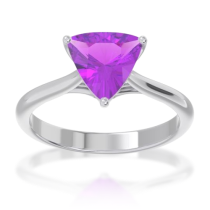
What to avoid: a high prong solitaire setting that elevates the stone significantly above the hand and exposes its full perimeter to contact with hard surfaces. This is the setting that generates the most complaints about amethyst engagement rings, because it combines the stone’s lower hardness with maximum exposure. A low-profile four-prong solitaire, with shorter prongs and the stone sitting closer to the hand, is more protective than a high setting and is acceptable for a thoughtfully worn amethyst ring.
The Daily Habit Commitment
Buyers who love their amethyst engagement rings tend to share one habit: they remove the ring before activities that involve significant physical impact, abrasion, or contact with hard surfaces. Gardening, heavy household work, sport, moving furniture, and similar activities are the scenarios where hardness matters most. For office wear, social occasions, and the vast majority of daily life, a well-set amethyst ring is appropriate and safe. The commitment required is specific and manageable, not a constant source of anxiety.
Understanding Amethyst Color
Unlike the stones earlier in this guide, where color grading follows a relatively clear quality hierarchy from less desirable to most desirable, amethyst color is largely a matter of personal preference across a genuine range of beautiful options. Understanding the full spectrum helps buyers choose the shade that resonates most personally, rather than simply following a market price signal.
The Full Color Range
Amethyst’s color ranges from the palest, barely-there lavender to a full range of mid-purple tones to very deep, richly saturated violet-purple. The color is caused by iron impurities and natural irradiation in the quartz crystal structure. The specific combination of trace elements and irradiation intensity determines where a given stone falls on the spectrum.
Deep Siberian Purple
The most prestigious color benchmark in amethyst is sometimes called Siberian, originally named for the Russian mines that produced the finest deep purple amethysts before other sources became commercially dominant. A Siberian-grade amethyst displays a deep, richly saturated purple with flashes of red and blue that shift with the angle of light. The color is complex and full without being dark or murky. Stones at this quality level command the highest prices within the amethyst market, though even these prices are modest compared to the Big Three gemstones. For buyers who want the most vivid, most complex purple expression, stones in this color range are the target.
Mid-Purple: The Most Versatile Range
The middle of amethyst’s color range, a clear, vivid medium purple without excessive darkness, is arguably the most practically versatile for an engagement ring. This tone holds its color well across natural daylight and warm indoor lighting, neither appearing pale in good light nor going dark and losing its vibrancy indoors. For buyers who are uncertain about whether they prefer deep or lighter amethyst, a medium-toned stone with strong saturation is a reliable starting point.
Rose de France: Pale Lavender
At the lighter end of amethyst’s color range sits Rose de France, a trade name for light, pinkish-lavender amethyst with delicate, soft color. Rose de France is the opposite aesthetic from Siberian purple: subtle, romantic, and understated rather than bold and vivid. It pairs particularly beautifully with rose gold, where the pinkish tone of the metal and the pinkish-lavender of the stone create a harmonious, soft composition that is genuinely distinctive. Buyers who prefer understated elegance over vivid color will find Rose de France an excellent choice. It is generally the most affordable end of the amethyst market.
Color Stability and Heat Sensitivity
One characteristic of amethyst worth knowing: the stone is sensitive to prolonged exposure to intense heat and direct strong sunlight over very long periods, which can cause the color to fade. For a ring worn daily and stored normally, this is not a practical concern. It is worth noting that leaving the ring in a sunny window or in a hot car regularly is a poor storage practice for most gemstones, particularly amethyst.
What Does an Amethyst Engagement Ring Mean?
The symbolism of amethyst has accumulated over thousands of years and is more coherent and more specifically fitting for certain personalities and relationships than that of more commercially dominant engagement ring stones.
The Greek origin of the name comes from amethystos, meaning not intoxicated, or more broadly, not overcome. Ancient Greeks and Romans believed amethyst protected its wearer from the effects of wine and from being overcome by passion or emotion. They carved amethyst into wine goblets and wore it as a talisman of clear-headed moderation. This is the earliest recorded symbolic meaning of the stone: clarity, calm, and the ability to think clearly and act with intention even in the midst of powerful emotions.
In medieval Europe, amethyst was one of the most important gemstones of the Catholic church. Bishops wore amethyst rings as a symbol of spiritual wisdom, purity of thought, and protection of the faithful. The stone’s purple color connected it to the purple vestments of the church, which signified both royalty and penitence, the willingness to reflect, to act with humility, and to seek clarity of purpose. This was not merely ceremonial. The stone was understood to actively carry these qualities.
In Eastern traditions, particularly within certain Buddhist and Hindu schools, purple stones, including amethyst, are associated with the crown chakra, the center of spiritual clarity, divine connection, and the deepest form of understanding. For buyers drawn to this symbolic framework, amethyst is among the most appropriate stones for a ring intended to mark not just a romantic but a spiritual commitment.
For an engagement ring, amethyst’s symbolism is particularly resonant for couples who want to express something specific about the nature of their relationship. It does not represent love that is primarily passionate and urgent, that is Ruby’s territory. It represents love that is calm, intentional, clear-headed, and chosen from a place of genuine understanding rather than being swept along by feeling. For couples who value these qualities in their relationship, amethyst speaks very directly.
Amethyst is the February birthstone and the traditional gift for the 6th wedding anniversary, associated with the growing depth and clarity of a relationship that has had time to settle and mature.
Amethyst and the Purple Engagement Ring Question
Buyers who arrive at Amethyst via a search for a purple engagement ring often want to know whether any other stone produces true purple at comparable or better quality. It is worth addressing this directly.
Tanzanite produces a vivid violet-blue that reads as purple in certain lighting conditions, particularly warm incandescent light. In daylight, it tends more toward blue. It is a beautiful and distinctive stone, but it is not a reliable true purple, and it rates only 6.5 to 7 on the Mohs scale, with lower toughness than amethyst. Fine tanzanite also commands significantly higher prices per carat.
Purple sapphire exists and produces a vivid, saturated purple at Mohs 9 with excellent toughness. It is a genuinely superior choice in terms of durability for buyers who specifically want purple. The constraint is price: fine purple sapphires are significantly more expensive than amethyst at comparable quality levels.
Alexandrite shifts between green and red-purple depending on the light source. At its most purple, it is extraordinary, but its purple is inconstant, appearing only under incandescent light and not under daylight. It is also extremely expensive for fine quality.
Iolite appears violet-blue in certain orientations but shifts to nearly colorless in others, creating a complex optical behavior that some buyers find appealing and others find unreliable.
The honest conclusion: for a reliably, consistently purple engagement ring at accessible prices, amethyst is the answer. Purple sapphire is better from a durability standpoint, but costs significantly more. For most buyers who want purple, amethyst is the right choice.
Setting Styles for an Amethyst Engagement Ring
Setting choice is more consequential for amethyst than for any other stone in this guide because the right setting actively compensates for the stone’s lower hardness. This section covers which settings are most protective, which are most aesthetically strong, and which combinations of settings and amethyst color yield the most compelling results.
Bezel Setting
A bezel setting is the strongest recommendation for an amethyst engagement ring and the most protective choice available. A full bezel encircles the entire perimeter of the stone in a continuous band of metal, protecting the girdle from lateral impacts and edge contact, which cause the most damage to softer stones. The stone sits close to the hand, reducing the likelihood of snagging or knocking against hard surfaces. The visual effect is clean and modern, and the amethyst’s color is framed by metal rather than being fully exposed on all sides. A round, oval, or cushion amethyst in a bezel setting is both the safest and one of the most elegant options for daily wear.
Halo Setting
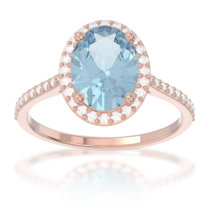
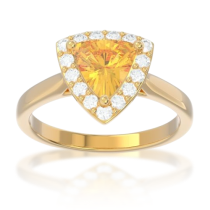
A halo setting surrounds the central amethyst with a ring of smaller diamonds, which serves double duty: it increases the apparent size and presence of the central stone and provides additional physical protection at its edges. The contrast between the purple of the amethyst and the white sparkle of the surrounding diamonds is immediately striking, creating an impression of considerable visual presence. For buyers who want maximum impact from a purple stone, the halo is an excellent choice. It is also one of the most historically appropriate settings for amethyst in fine jewelry, appearing frequently in Victorian and Edwardian amethyst pieces.
Three-Stone Setting
A three-stone setting places the amethyst at the center, flanked by two side stones. A central amethyst with two diamond side stones creates a balanced composition with strong contrast between the purple center and the white flanking stones. The design works well for oval and cushion cut amethysts, where the horizontal line of the three stones creates a wider field of purple on the finger. The setting also provides some lateral protection for the center stone through the physical presence of the side stones.
Channel and Flush Settings
For an amethyst set into a band rather than presented as a solitaire, channel and flush settings are the most protective options. Channel settings embed the stone flush within metal channels on either side, eliminating exposed edges entirely. Flush settings, where a single stone is set level with the surface of the metal, are even more protective. Both are particularly well-suited to smaller amethysts used as accent stones in a band design, where the purple appears as a recurring element across the ring rather than as a single focal point.
Low-Profile Prong Setting
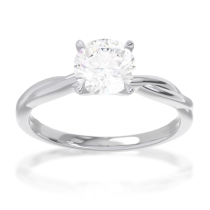
A prong setting is achievable for amethyst but should be low-profile rather than high. Short prongs that hold the stone close to the hand are significantly more protective than tall prongs that elevate the stone above the band. A four-prong low solitaire in yellow gold or rose gold with a cushion or oval amethyst is a beautiful option for buyers who prefer the open, light-maximizing aesthetic of a prong setting and are committed to caring for the ring appropriately. Six-prong settings are not recommended for amethyst as they expose more of the stone’s perimeter.
Vintage and Art Nouveau
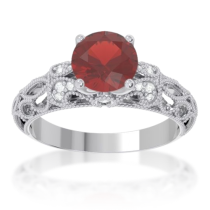
Amethyst has a particularly strong historical association with Victorian and Art Nouveau jewelry, periods when the stone’s purple color and its associations with spirituality and romantic poetry made it one of the signature stones of the era. Art Nouveau settings with organic, flowing forms in yellow gold complement amethyst exceptionally well. Buyers drawn to period aesthetics will find that amethyst is one of the most historically appropriate choices for a vintage-inspired engagement ring.
Choosing the Right Metal for an Amethyst Engagement Ring
The metal choice changes how amethyst’s purple reads on the hand more than it does for most other stones, because purple is a color that responds very differently to warm and cool metal tones. Getting this right is one of the most enjoyable parts of designing an amethyst engagement ring.
Rose Gold
Rose gold is the strongest and most harmonious pairing for most amethysts. The warm pinkish tone of rose gold and the cool purple of the stone create a complementary relationship where neither color dominates the other, and both are enhanced by the contrast. For pale lavender amethysts, rose gold warms and enriches the delicate color. For mid-purple amethysts, rose gold creates a romantic, layered palette that is immediately distinctive. For deep violet-purple stones, rose gold adds warmth, preventing the setting from feeling cold or austere. Across the full range of amethyst tones, rose gold is consistently the most flattering and most frequently praised pairing. Azeera offers 14k and 18k rose gold.
Yellow Gold
Yellow gold creates a bolder, more classical contrast with amethyst’s purple. The warm golden tone sits almost at the opposite end of the color wheel from purple, creating vivid contrast rather than harmony. For deep, richly saturated purple amethysts, yellow gold provides exactly this kind of contrast: the two colors intensify each other rather than blending. For lighter lavender amethysts, yellow gold can read as harsh or mismatched against the delicate color. Yellow gold is the right choice for buyers who want a bold, confident ring with strong visual contrast. Azeera offers 14k and 18k yellow gold.
White Gold and Platinum
White gold and platinum create a cool, contemporary look with amethyst. The metal’s neutral tone allows the stone’s purple to draw all the visual attention without a warm color competing with it. This works particularly well for deep, highly saturated violet-purple amethysts where the stone is strong enough to hold the composition on its own. For lighter lavender stones, white metal can make the overall ring feel pale and understated, a look that may or may not be intentional. Platinum is the most durable and low-maintenance option. White gold requires rhodium plating every one to two years. Azeera offers 14k and 18k white gold and platinum.
Origin and Treatment: A Simpler Story Than Most Gemstones
Amethyst has the most straightforward origin and treatment story of any gemstone in this guide. Understanding it is quick and reassuring.
Origins
The major commercial sources of amethyst include Brazil, Uruguay, Zambia, and Namibia. Brazil is the dominant global source and produces amethyst across the full range from pale to deep purple. Uruguay is known for producing some of the most intensely colored deep violet amethysts. Zambia and Namibia produce amethysts that can achieve an excellent deep purple color. Unlike ruby or emerald, where origin has a direct and significant effect on price and value, the origin of amethyst is a less commercially significant factor. The color of the specific stone matters far more than its origin.
Treatment
The vast majority of amethysts on the market are natural and untreated. Some lighter amethysts are heat-treated to improve color, and some amethysts are irradiated to deepen or change the color. These treatments are generally stable but may not be disclosed in the commercial market because amethyst is not a stone for which treatment carries the same price implications as for ruby, sapphire, or emerald. For most buyers, the treatment question is not a significant factor in amethyst selection, and the focus should be on evaluating the specific stone’s color quality rather than its treatment history.
Caring for an Amethyst Engagement Ring
Amethyst requires more attentive daily care than sapphire or ruby, but the requirements are specific and manageable rather than constant or complicated.
Daily Habits
Remove the ring before heavy physical work, gardening, sports, and any activity where it might come into contact with hard surfaces with significant force. This is the single most protective habit you can develop for an amethyst engagement ring and the one that most directly compensates for the stone’s lower hardness. Remove the ring before applying perfumes, hand lotions, and hairspray. Remove it before swimming in chlorinated pools and before using harsh household cleaning products. These habits protect both the stone’s polish and the setting’s finish over decades of wear.
Cleaning at Home
Soak the ring in warm water with a few drops of mild dish soap for 10 to 15 minutes. Use a very soft brush to gently clean around the setting and under the stone. Rinse thoroughly and pat dry with a lint-free cloth. Avoid ultrasonic cleaners, which can stress the stone over repeated use. Avoid steam cleaning and prolonged exposure to direct sunlight, as both can cause color fading over time. The warm-water and mild-soap routine is safe and effective for weekly use.
Professional Care
Have the ring professionally inspected and cleaned once a year. The inspection checks that the setting remains secure and that any prong tips or bezel edges have not worn to the point of putting the stone at risk. For amethyst in a bezel or halo setting, annual inspection is a relatively quick process. Azeera offers a lifetime warranty on manufacturing defects and free resizing for the first year after purchase.
Storage
Store the ring separately from other jewelry. While amethyst will not scratch from contact with most softer gemstones, it can be scratched by harder stones, including sapphire, ruby, and diamond, if stored in contact. A separate fabric-lined box or pouch is the right approach for any gemstone engagement ring, particularly for amethyst.
Why Choose Azeera for Your Amethyst Engagement Ring?
Azeera has been a family business for 75 years. Every ring is cut and set by hand in our New York City workshop. We source individual stones evaluated against strict standards for color depth, evenness, and clarity. For amethyst, color is the primary quality variable, and we are selective in the stones we accept.
Amethyst’s visual impact is almost entirely a function of color quality. The difference between a deeply, evenly saturated amethyst and a pale, uneven stone is enormous at eye level. We evaluate every stone individually for color depth across the full face, even distribution without zoning or patches of lighter color, and clarity that does not interfere with the color’s richness. Pale, weakly saturated stones are not appropriate for fine engagement rings regardless of their size, and we do not purchase them.
We do not use stock photography. Every product image on our site shows the actual stone you are purchasing. For amethyst, where color varies considerably between stones at similar price points, seeing the actual stone matters. The purple you see in the photograph is the purple of the specific stone that will arrive on your finger.
We are also direct about durability. We will not tell you that amethyst is as suitable for unrestricted daily wear as sapphire or ruby, because that would not be accurate. What we will tell you is that with the right setting, which we will help you choose, and the right care habits, which we will explain clearly, an amethyst engagement ring is a beautiful and appropriate choice for the right buyer.
Our amethyst engagement rings are available in all seven metals: 14k and 18k yellow gold, 14k and 18k white gold, platinum, and 14k and 18k rose gold. We also offer fully custom commission engagement rings for buyers with a specific design or color in mind.
Browse our amethyst engagement ring collection to begin. And if you are still comparing amethyst to other options, our complete guide to gemstone engagement rings covers every stone we offer in detail.
Frequently Asked Questions
Is amethyst durable enough for daily wear as an engagement ring?
Yes, with the right setting and deliberate care habits. Amethyst rates 7 on the Mohs hardness scale, the softest stone in Azeera’s engagement ring catalog. At this hardness, prolonged exposure to quartz dust can cause surface microabrasion, and the stone is more vulnerable to edge chipping from hard impacts than sapphire or ruby. A bezel, halo, or channel setting that protects the stone’s edges significantly compensates for this. The habit of removing the ring before heavy physical activity, gardening, and situations involving hard impact is the other essential mitigation. Buyers who choose protective settings and develop these habits tend to be very happy with their amethyst rings. Those who choose high prong settings and wear them without restriction are the ones who report problems.
What does an amethyst engagement ring mean?
Amethyst has been associated with calm, clarity, sincerity, and protection from being overcome by strong emotion for thousands of years. The Greek name amethystos means not intoxicated or not overwhelmed. Ancient Greeks believed the stone protected its wearer from excess and from losing clear judgment. In medieval Europe, Catholic bishops wore amethysts as symbols of spiritual wisdom, pure intention, and protection for those in their care. In Eastern traditions, it is associated with the crown chakra, the center of spiritual clarity and divine understanding. For an engagement ring, amethyst symbolizes a love chosen from a place of genuine clarity and calm intention, rather than swept along by passion. It is the February birthstone and the traditional gift for the 6th wedding anniversary.
Which metal pairs best with amethyst?
Rose gold is the strongest and most harmonious pairing for most amethysts. The warm pinkish tone of rose gold and the cool purple of the stone complement each other without competing. Rose gold works across the full range of amethyst tones from pale lavender to deep violet-purple. Yellow gold creates a bolder, more contrasting composition that works best for deep, richly saturated purple stones. White gold and platinum create a cooler, more contemporary look that lets the purple take all the visual attention and works best with strongly saturated stones. For most buyers who start without a strong metal preference, rose gold with amethyst is the safest and most beautiful option.
What is the difference between lavender amethyst and deep purple amethyst?
Lavender amethyst, also called Rose de France, is light, soft, and pinkish-purple, with a delicate color. It pairs particularly well with rose gold, creating a subtle, romantic aesthetic. Deep purple amethyst, often called Siberian grade, is richly saturated with complex flashes of red and blue that shift with the angle of light. It makes a bolder, more vivid statement and pairs well with both yellow gold and rose gold. Neither is objectively better. The right choice depends on whether you prefer an understated, romantic color or a vivid, statement-making purple. Most amethyst buyers have a strong personal preference once they see both side by side.
Is amethyst a good choice for someone with an active lifestyle?
It depends on the nature of the activity and the chosen setting. Amethyst in a bezel or halo setting, worn with the habit of removing it before physically demanding activities, is appropriate for most lifestyles. For buyers who work with their hands professionally, engage in significant outdoor physical activity regularly, or know they will not reliably remember to remove the ring during these activities, a harder stone such as sapphire, ruby, or aquamarine is a more suitable choice. For buyers with active lifestyles who also value design flexibility and are committed to protective habits, amethyst is manageable and beautiful.
Can an amethyst engagement ring be resized?
Yes. Amethyst tolerates the heat involved in standard ring resizing. Solitaire and halo settings can typically be resized by an experienced jeweler by one to two sizes in either direction. Channel settings with stones set continuously around the band require removing and replacing stones to resize the band. Azeera offers free resizing for the first year after purchase on all rings we make. Confirming ring size before ordering is always advisable.
How much does an amethyst engagement ring cost?
Amethyst is one of the most affordable fine gemstones in the jewelry market. The stone itself accounts for only a modest portion of the total ring cost, meaning the budget goes primarily toward the setting design, metalwork, and craft quality. An Azeera amethyst engagement ring in a well-designed bezel or halo setting in rose gold or yellow gold is typically significantly more accessible than comparable sapphire, ruby, or emerald rings of the same setting complexity. We are happy to discuss options across all budget levels and to help allocate the budget toward the design elements that matter most to you.
Does amethyst fade in sunlight?
Amethyst can fade with prolonged exposure to intense heat and direct sunlight. For a ring worn daily and stored normally indoors, this is not a practical concern. It is worth being aware of if you live somewhere with extremely intense sun and habitually leave jewelry in sunny windowsills or hot cars. Storing the ring in a fabric-lined box away from direct sunlight when not wearing it is a simple and effective precaution.